
This is what happens to agricultural machinery over 10 000 hours of operation
2026. January 26.The life of agricultural machinery is measured in hours of operation, not years. While for a passenger car it is the mileage that counts, for a tractor or combine harvester it is the number of hours of operation that determines how much wear and tear it can withstand.
If a machine has more than 10 000 hours of operation, it has been doing a lot of work for a long time, and this has an impact on its performance, reliability and economy.
What is the design lifetime?
The design life of agricultural machinery, especially tractors, is around 8-10 000 hours. Manufacturers and agricultural professionals estimate that this is as long as they can still do a good job. Many tractors fall into the 10-12,000 hour range, and this does not mean that the machine will stop working, but that there is a greater chance of breakdowns that need to be repaired, which can be costly.
However, this duration is not a function of a single factor, as it is also influenced by the intensity of use, the number of hours per year, the quality and frequency of maintenance, working conditions, as well as the manufacturer’s technology and quality.
What happens above 10 000 hours?
When an agricultural machine reaches or exceeds 10,000 hours of operation, wearing parts such as engine gears, bearings, hydraulics are subject to increased stress. The engine and drive train are already under considerable stress and increasingly require partial overhaul or replacement of parts, which can significantly increase maintenance costs.
Performance decline and efficiency issues
Wear and tear is a natural part of the machine’s performance, which decreases over time. Engine fuel consumption may even increase and the hydraulic system’s response time may slow down. Fault messages may become more frequent, but mechanical problems in the control system or components are not uncommon. These problems are typically due to overloading over the operating hours mentioned above.
This also means that the machine no longer runs as smoothly and efficiently as before, and operating costs such as fuel, parts and man-hours can increase significantly.
When should you change?
When to replace a machine depends on many things. Not only the technical condition has to be looked at, but also the economics. In the case of agricultural machinery, a life-cycle cost analysis shows that the annual costs and risks for a tractor with 10 000 hours of operation often exceed the point at which it may be worthwhile to buy a newer or younger machine.
What can we do above 10 000 hours?
If you decide to stay with the machine, there are a few things to keep in mind so that you can keep using it. One of the most important is maintenance, which has never been more important than with high-hour machines. Engine oil, filters, hydraulic hoses, brakes and other wear parts need to be replaced more often than before. But ongoing maintenance can help avoid major failures and extend the life of the machine.
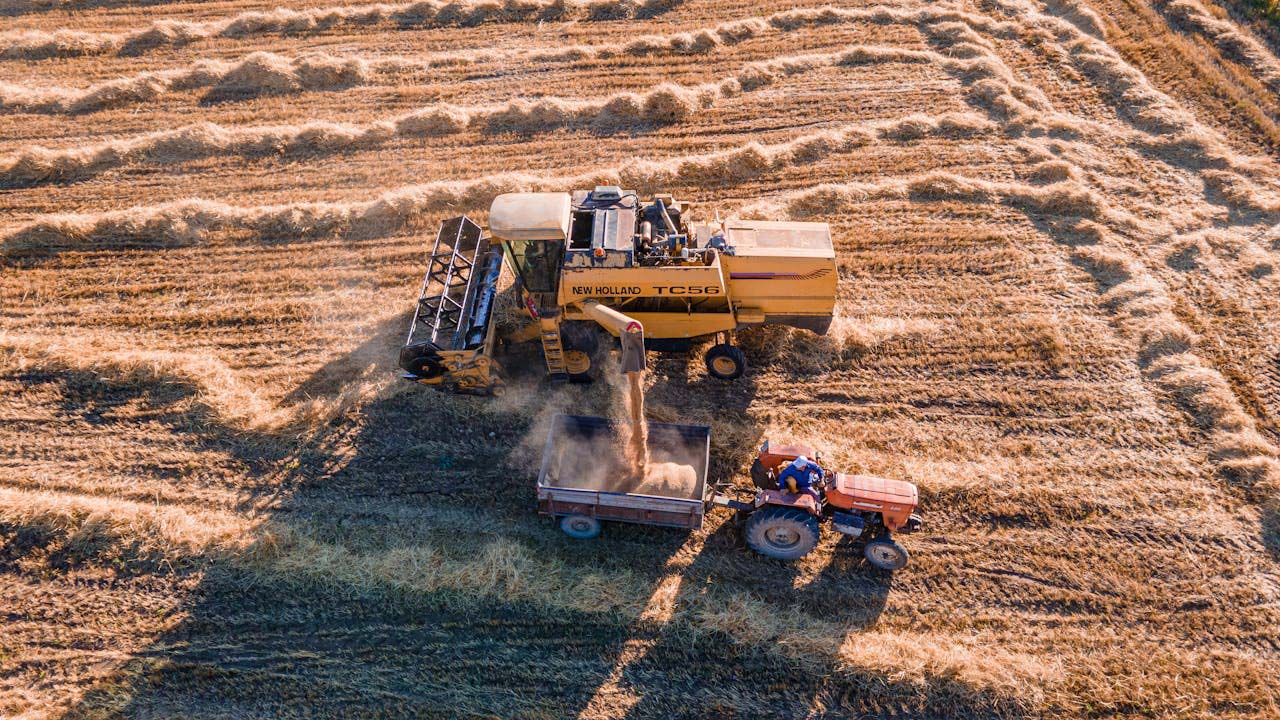
The other important thing to do is to assess the condition and replace parts regularly. After all this time, it is common to need partial engine overhauls, driveline repairs and hydraulic system maintenance. These are designed to keep the machine in service for many years to come.
But for those who decide to sell, it may be worth choosing a more technologically advanced model with GPS control and precision systems. This will not only increase operational efficiency, but can also improve the competitiveness of the farm.
The life of agricultural machinery should therefore be measured in hours of operation. A well-maintained combine harvester or tractor, especially the modern, more powerful versions, can reach 10-15,000 hours of operation while doing its job efficiently. Of course, this requires proper maintenance, parts replacement and repair work.