
What you need to know about the hydraulic systems on modern tractors
2026. January 12.When we talk about the development of agricultural machinery, we often only look at engine performance and automated steering. In reality, however, one of the most important components of tractors, which allows them to move machinery, work efficiently and farm with precision, is the hydraulic system itself.
The hydraulics of modern tools have evolved from mechanical power transmission to the intelligently controlled power transmission based on fluid power that is key to today’s agriculture.
The basis of hydraulics
The basic principle of hydraulics – that enormous forces can be generated and transmitted by the pressure of an almost incompressible fluid – is based on Pascal’s law, which is already used in agriculture, where oil or hydraulic fluid also serves as a medium for energy transfer. The engine of the tractor drives the hydraulic pump, which pressurises the fluid, thus ensuring that the machinery is raised, lowered or otherwise moved.
Without the hydraulics, the tractor would only be able to tow, but it would not be able to efficiently operate the more powerful cultivators, seed drills and borers, or even the threshing drum inside the combine. Accordingly, a hydraulic system is essential for any job where power and fine control are needed to get the job done.
What are the main elements of the system and what do they do?
The tractor’s hydraulic system is not a single component, but consists of several interconnected elements that cooperate with each other. The hydraulic pump is the heart of the whole system, generating pressure and delivering hydraulic fluid to the rest of the system. The latter is sucked from a reservoir, pressurised and delivered to the control valves. These valves, which can be either mechanical or electro-hydraulic, or even fully electronically controlled, will decide which hydraulic fluid goes into which working cylinder or engine.
And it’s the working cylinders that move under the action of oil pressure that provide the real movement, whether it’s lifting a suspended implement, adjusting a row of cultivators or even controlling the sprayer wheel of a sprayer. Connecting pipes and hoses are also used to transport the fluid, while various valves and safety elements ensure that the system does not come under too much pressure.
Closed centre systems and more modern solutions
Today’s modern devices generally feature closed-centre hydraulic systems that distribute energy more efficiently than older open systems. In such a system, the pump continuously delivers oil, but only pressurises it through control valves when it is actually needed. This improves fuel efficiency and reduces unnecessary heat generation.
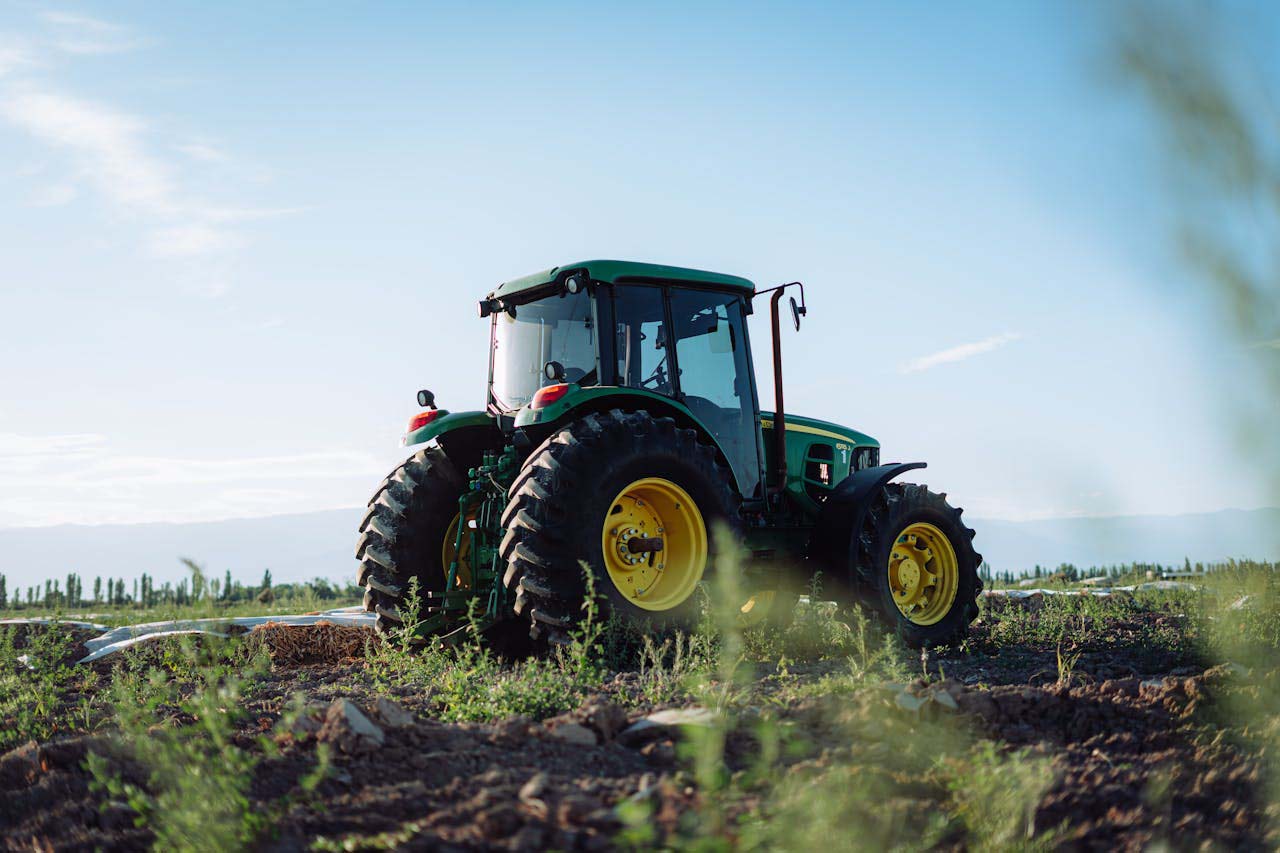
For example, there is the Landini 6RS tractor series, which uses a closed, variable displacement pump capable of delivering up to 114 litres/minute of fluid, in addition to multiple electro-hydraulic valves and a high lift pendant system. And these advanced systems allow not only greater performance, but also the precision management that is essential in today’s modern world if one is to make a profit. Electronically controlled hydraulics, for example, can automate depth control in the soil, positioning of spreader wheels and even fine control of steering in conjunction with GPS-based automatic steering systems.
The role of hydraulics in everyday farming
The hydraulics system serves not only the suspensions, but also the movement of tractor-mounted seeders, sprayers, balers and loaders. Sprayers, for example, use hydraulic spreader control to achieve stable and even spraying on uneven ground. In contrast, front-end loaders lift and tilt large loads using hydraulic cylinders.
With this system, the tractor becomes not only a power machine, but also a versatile work platform capable of performing a wide range of tasks on the farm. The flexibility and power of hydraulics gives you the ability to multitask at high performance, whether it’s cultivating, sowing, crop protection or even harvesting later.