
This is how much fuel GPS saves in the field
2026. June 2.One of the most significant technological advances in recent times has been the widespread adoption of GPS-based row guidance and automatic steering systems. While many farmers previously viewed GPS as merely a convenience feature, more and more are now recognizing how this technology helps reduce fuel consumption, increase work efficiency, and lower production costs.
Why do agricultural machines without GPS consume more fuel?
Modern machinery—whether tractors, sprayers, seeders, or combine harvesters—is operating with ever-wider working widths. However, on an area of several dozen hectares, even a deviation of just a few centimeters results in multiple passes. These unnecessary overlaps not only affect fuel consumption but also increase machine wear and tear as well as the amount of input materials used.
In traditional operations carried out solely under operator control, there are almost always gaps or overlaps. The machine operator constantly tries to maintain a straight path, but concentration can drop significantly during long shifts, especially at night or in poor visibility conditions. As a result, during spraying or fertilizer application, overlaps of up to 5–10% can occur, which means that this much more spray or fertilizer will be needed. The machine passes over the same area multiple times, unnecessarily consuming fuel in the process.
The main advantage of GPS-based systems is that they minimize these overlaps and guide the machine along the designated path with centimeter-level accuracy. In practice, this means that the tractor works exactly as much as necessary. There are no unnecessary detours or excessive overlaps, so the engine runs less and consumes less fuel.
How much fuel can be saved?
The amount of savings depends on many factors: the size and shape of the fields, the working width of the machines, and the type of task at hand. Experience shows that using GPS-based automatic steering can reduce overlap to 1–2%, which is reflected in fuel consumption.
For example, on a 100-hectare farm, we estimate an average diesel consumption of 15 liters per hectare for various operations. If we can reduce unnecessary work by 5% using a GPS system, we save roughly 74 liters of fuel during a single operation. If we apply the same approach to planting, spraying, and fertilizing, the farm could save several hundred liters of diesel by the end of the season.
You can save money on more than just diesel fuel
Fuel savings are, of course, important, but GPS technology has an impact beyond this area. Thanks to precise path guidance, the application of seeds, fertilizers, and pesticides is reduced. Less overlap means that the same amount of material isn’t applied twice to the same area. This not only saves money but can also improve crop uniformity.
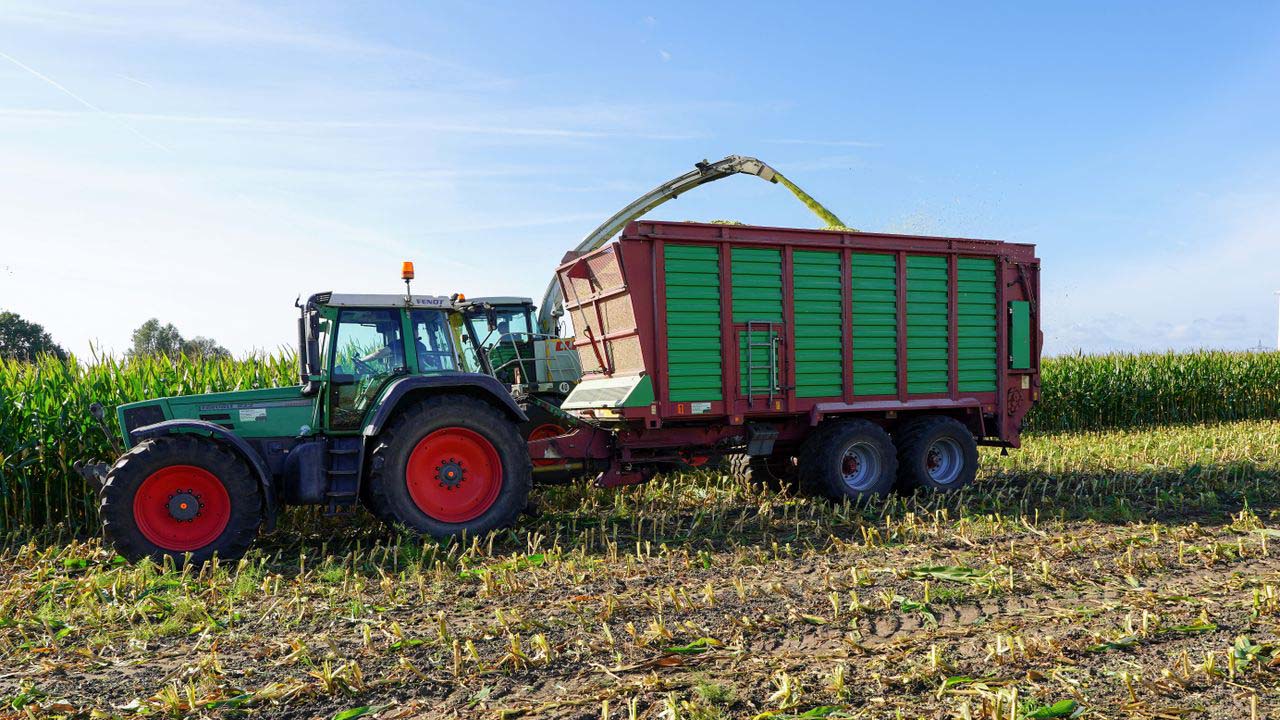
Not to mention that the machines’ operating hours are also reduced. Since there are fewer unnecessary trips, tires, drivetrain components, and machine parts wear out more slowly. For a modern machine or self-propelled sprayer, this can add up to significant savings over the long term.
Working More Efficiently
GPS-based automatic steering not only improves fuel efficiency but also speeds up the work. This is because the operator does not have to constantly focus on staying on course, allowing them to devote more attention to the machine’s operation, the condition of the field, and the amount of material being applied.
During long days, everyone gets tired, which affects performance. The system, however, operates consistently with the same precision, so there will be no fluctuations. This is especially important for tasks carried out within short time windows, such as planting or crop protection treatments.
In fact, even the efficiency of nighttime work may increase, since while it used to be more difficult to follow the route accurately in the dark, the time of day makes virtually no difference to the GPS system.