
Drought tolerant cereals and other crops
2023. April 26.The weather in our country is constantly changing, but what is certain is that summers are getting hotter and drier.
So it’s no surprise if it doesn’t rain for weeks and then the ground only gets enough moisture to wet the top.
























Climate change has also focused attention on crops that tolerate these conditions well.
In this article we describe these crops in more detail.
What has happened recently?
The development of cereals is getting slower every year due to the drought.
In many cases, they stagnate or even fail to grow at all, as rainfall is scarce and the nights are often so cold in spring that they have no chance of developing.
The worst situation is usually in the lowlands, where there is often insufficient rainfall in winter, compared with the Transdanubian region, where fortunately the situation recovers intermittently.
As a result, crops develop differently in different parts of the country.
Analyses by the National Meteorological Service show that between 1901 and 2016, the largest decrease in precipitation in Hungary occurred in spring.
Over the last 100 years, the total rainfall in March, April and May has fallen by about 17%.
In addition, it is very likely that there will be more and more years in which spring will become so dry that drought is already to be expected.
And it is clear that the best use of soil moisture is made by plants and crops that have a dense root system and strong absorption capacity.
Spring barley, which is poorly developed, is unable to make use of the soil’s water reserves, while oats have a much better chance of survival.
Drought-tolerant cereals have root systems that are highly branched, like maize, or deep, like alfalfa.
Can drought-tolerant crops really solve the problem?
Terrestrial plants that can withstand heat and drought have been cultivated for many decades.
As the biggest problem is water scarcity, it is also the cause of the biggest yield losses, especially in wheat and durum wheat.
The aim is therefore to breed resistant genotypes that can withstand the new climate. 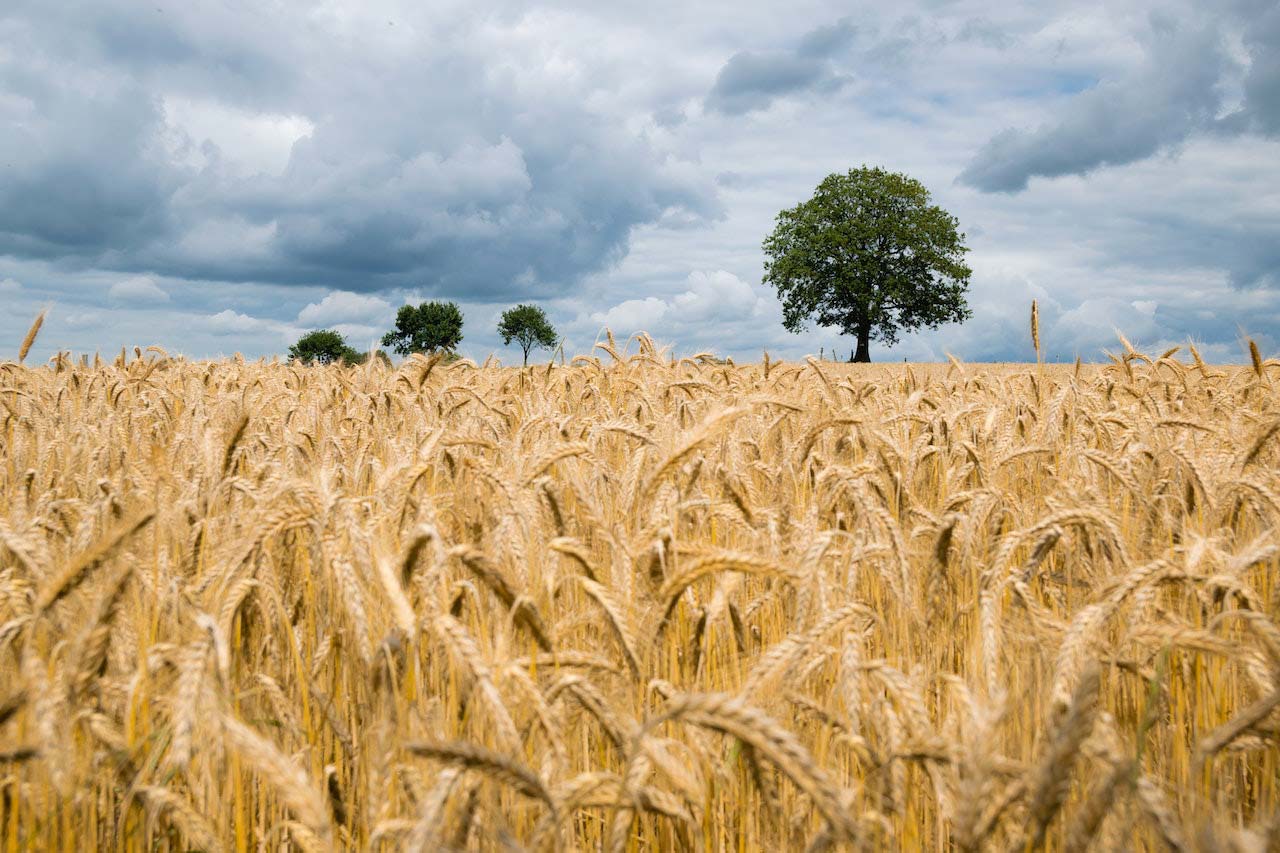 In recent years, varieties with adaptability such as drought-tolerant wheat and fodder sorghum have been developed in this country, as breeding and similar biotechnological experiments have already provided researchers with good results.
Although sorghum was popular in the past, mainly for animal feed, it can now be used to produce a wide range of foodstuffs for human consumption.
In addition to these, amaranth is a true survivor, having survived colonisation.
A member of the pig family, it is considered by many tribes to be their main source of food, and for good reason.
In South America, for example, hundreds of varieties are still cultivated and grown today, as well as being eaten in dishes made from amaranth seeds.
In the Americas, it has been grown on large-scale farms since the 1980s, and many foods made from it are available in shops.
Its great advantage is that its seeds contain nine essential amino acids and are an excellent source of vitamins and antioxidants.
Climate-ready plant breeding
There is a plant that has been bred to withstand climate change.
Identified as a cereal crop in the 1980s, kernel grass is a wheat-like grass that can withstand hardship much better than wheat.
Its big advantage is that it is perennial, so unlike wheat it does not need to be planted every year.
Its roots can be up to three metres long, which allows it to fix a lot of carbon from the air.
Hybrids are nowadays used by many bakers, chefs and brewers, especially in the United States and Canada.
In 2021, 4,000 hectares were already under cultivation in these two countries, and the area sown has increased eightfold in two years.
However, the global grain crisis means that this could easily increase further, as the kernel is also drought tolerant.