
Will robotics now be at every major exhibition?
2024. February 17.Robotics is playing a growing role in almost every field, and agriculture is no exception.
Their presence at trade fairs is already becoming more and more common, with not only self-propelled machines but also drones and other automated devices.
In the following article, we will talk about agricultural robotics.
We will tell you whether they will take over from now on, replacing manual labour.
The role of robotics in agriculture
The integration of robots in agriculture has already started.
Some agree that they are the way we produce our daily food, some disagree, but the fact is that they are a huge help in times of labour shortages.
Not to mention the fact that these systems work more efficiently, faster and more cost-effectively, saving time and money.
Smart agriculture relies on the latest research and data generated by agri-food activities, as well as transparency.
In addition to robots, artificial intelligence (AI) has also crept into the field, enabling agriculture to achieve goals that would be impossible with human power.
Advances in the computer and electronics industries have almost merged robotics and computer technology.
AI has come into being, allowing us to create automated systems that can learn.
What machines can we work with?
One of the most popular is undoubtedly the self-propelled tractor and machine, which can navigate independently in the agricultural field.
This can be a combine harvester, a sprayer, which can work accurately with the help of GPS and other sensors.
However, the main advantage is that they are economical to run, as there are many situations in which a low-cost self-propelled machine can be useful in production.
Another popular area concerns drones, which are mainly used for surveying, monitoring and surveillance of agricultural land.
They can be used to quickly and efficiently monitor the condition of crops, the incidence of disease, but also to identify pests.
They detect nutrient deficiencies, so that we can intervene at any time if intervention is needed.
It is also important to mention the tools used for harvesting, such as pickers, which can pick fruit and vegetables automatically.
These machines are designed to use cameras and algorithms to accurately identify, gently handle and harvest the crops.
Automated systems
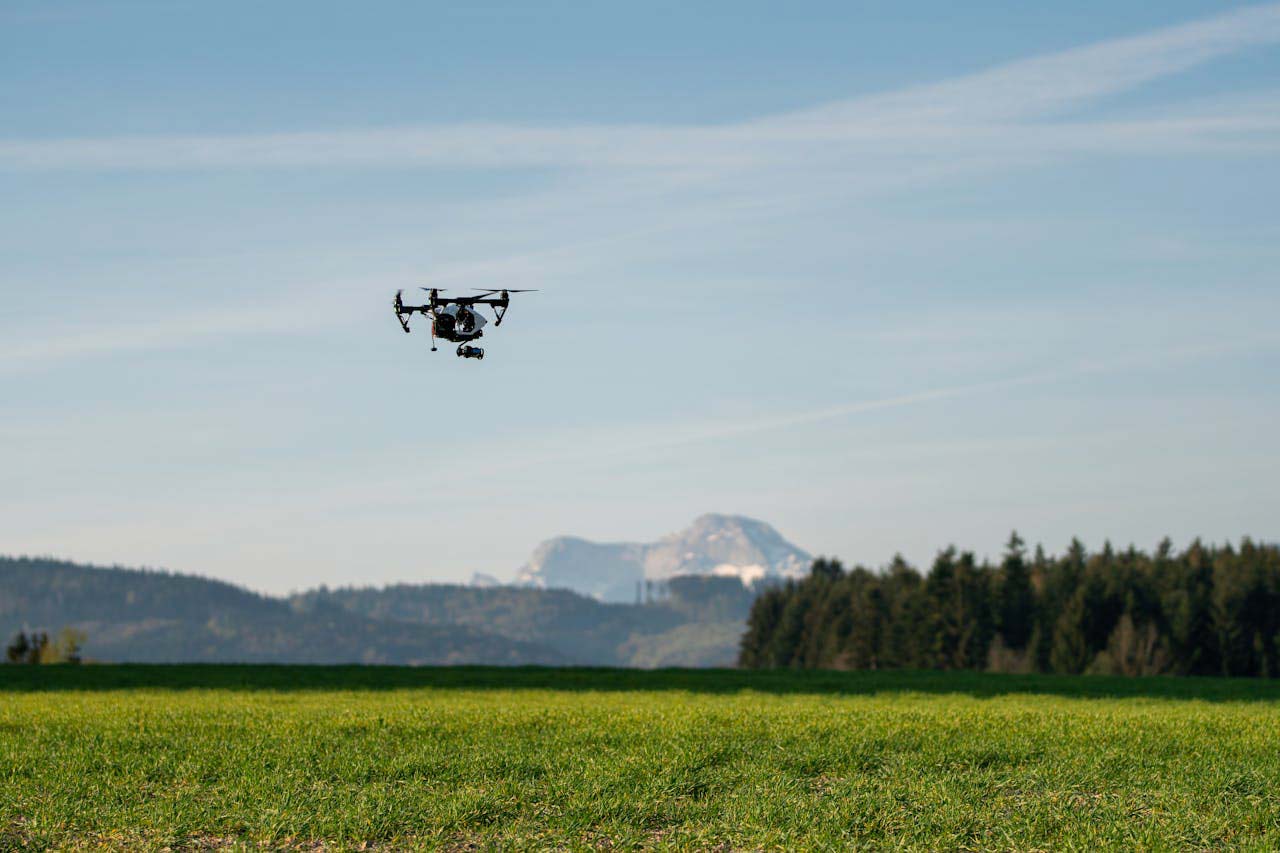 In a separate category are automated spraying systems, which take care of the crop protection themselves.
These can be either ground-based or aerial, as they use various sensors to effectively treat the area to be sprayed, minimising the overuse of chemicals.
Why do we need them?
It’s no coincidence that at the biggest agricultural exhibitions you can see more and more self-propelled tools and automated systems.
Few people know it, but in the case of plant health products, up to 99% can be wasted if the application is not targeted, if the whole area is not covered.
However, robotics may be able to spray pesticides only where they are needed.
As agriculture has been completely transformed in recent decades, the concept of knowledge transfer has been almost completely lost.
There is no one to take over small or large farms, so farmers are forced to turn to robotics.
Fortunately, the sector has found a way to increase food production, but modern technology is essential.
That’s why we need automation, self-propelled machines, drones to do the work for us.