
How much is a drone worth on the ground? Aerial photography and precision decision-making
2026. March 31.Agriculture has undergone a huge transformation over the past decade. Traditional, experience-based farming has been replaced by data-driven decision-making. Drones play a big role in this. What used to seem overly modern, almost futuristic, is now on almost every farm.













Growing from a new perspective
The idea behind precision farming is that the farmer should not manage his land as an average, but intervene exactly where it is needed. Drones can help you gather information about your crop quickly, cost-effectively and in detail. However, these tools are not just for recording, they can also be used as active tools. They can even be easily used on small farms.
Perhaps the greatest value of the drone is that it shows the area from above. The high-resolution imagery allows farmers to see connections they wouldn’t see from ground level. During a flight, orthophotos, vegetation maps and condition assessments can be taken to get an accurate picture of plant development.
RTK-corrected models, for example, produce georeferenced images accurate to centimetres, so the same area can be regularly re-surveyed, compared and analysed. This provides the basis for precision farming.
Decision made from data
The advantage of drones is not that they fly, but that they process the data they collect. In fact, thermal or hyperspectral sensors provide real-time information on plant health, soil moisture and nutrient availability.
Moreover, drone-based monitoring has recently revolutionised crop yield forecasting and plant health monitoring. On individual farms, this type of technology has successfully reduced resource wastage and optimised production. All this while allowing early disease detection. So in modern agriculture, decisions are less and less taken by intuition. Rather, they are based on data provided by drones.
Measurable returns and cost reduction
It’s not so old news that drone crop protection can reduce the amount of water needed for spraying by up to 90%, while increasing the yield of individual crops by 5 to 10%. As a result, in many cases the use of drones can provide a 12-15% increase in farm income by reducing inputs and improving crop quality.
The biggest problem
The biggest problem in agriculture at the moment is labour shortages. It is no accident that we are increasingly mechanising this area. Drones are helping to do this. A single pilot can inspect hundreds of hectares in a short time, which used to take days and was often not so accurate.
Not to mention the effects of climate change. Extreme weather often requires rapid damage assessment, fast and objective data in the event of storm, drought or wildlife damage. This is also beneficial from an insurance and subsidy point of view, as we get money first, find a solution to the problem sooner and save what can be saved.
Not just a camera
Many farmers still see drones as a flying camera. But nowadays it’s also a working machine. Modern agricultural drones can sow, spray, apply nutrients and often control livestock.
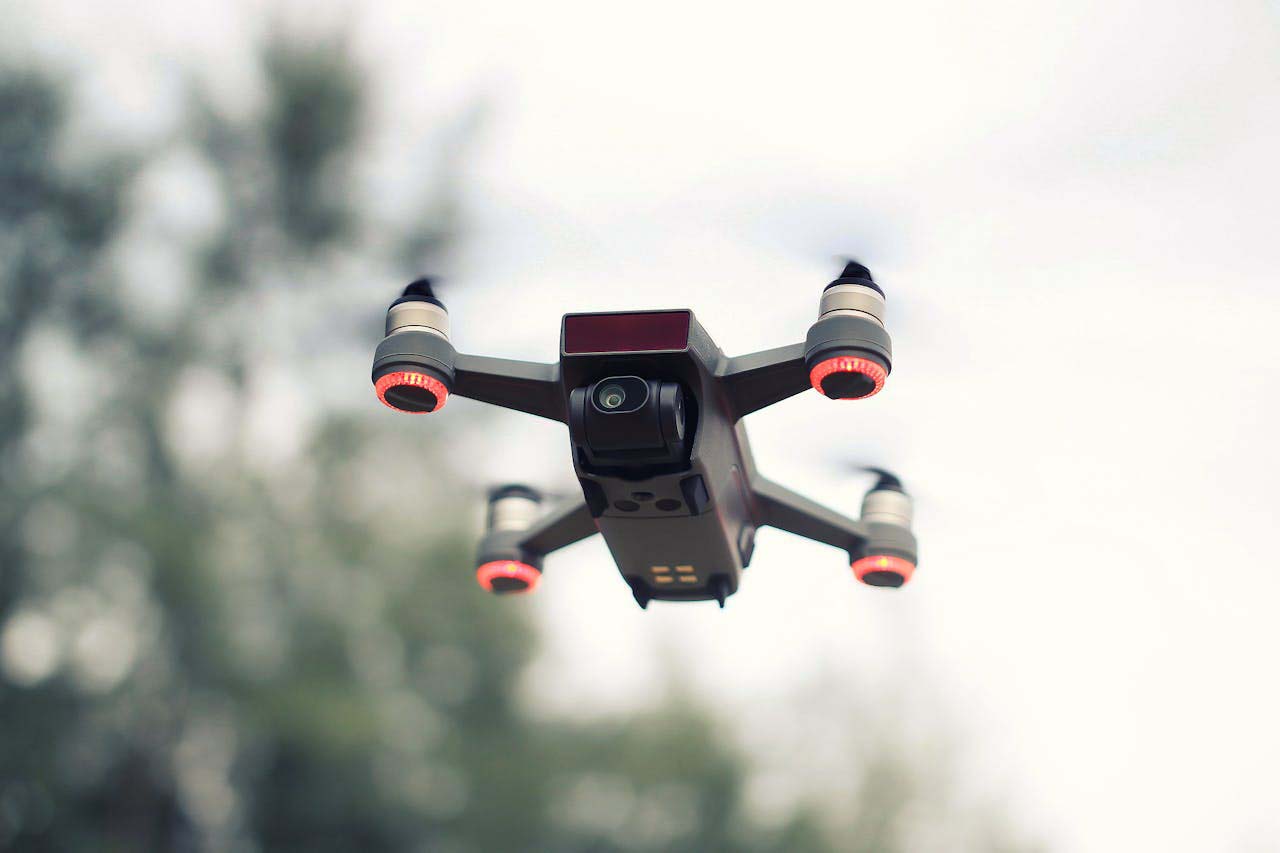
In precision spraying, the main advantage of the device is that it delivers the material exactly where it is needed, significantly reducing chemical use and environmental impact. The fact that flight paths can nowadays be easily optimised is a great help. In effect, the process creates a digital farm management.
So the advantage of a drone is not to take pictures at altitude, but to provide information. It allows us to see the problem more easily and quickly, to intervene more accurately and to use fewer resources.