
What are the most common pests in agriculture?
2022. January 31.Anyone involved in agriculture knows that protecting crops is extremely important.
There are many pests that can attack crops and nowadays almost all crops have specific pests.
Because there are so many different crops, the pests can be quite diverse.




















In Hungarian agriculture, cereals are the most abundant crop, so cereal pests are perhaps the best known and most common, eurokartevoirtas.hu reports .
Control of these pests in agriculture is of course also carried out on a large scale, which is necessary as small-scale methods are not always viable in larger areas.
But what are the basic pests that a farmer needs to control?
Is it different in terms of pests whether it is a large area or a raised bed or a small kitchen garden?
Most common pests of agricultural land
In agricultural areas, a number of pests can occur.
This is because there are so many introduced species that cannot always be controlled, but plant breeding and ongoing research are also playing a role in the emergence of more and more pest species.
It would be almost impossible to list them all, but there are some pests that are quite widespread in agricultural areas.
But what are they?
- rodents: the most common pests of cereals and other crops are voles, mice and hamsters.
Field rodents are frequent visitors to cereal fields, which are an almost inexhaustible source of food for them, but they also eat plants as well as cereals.
These rodents appear mainly in the autumn, before winter, so that they can be sufficiently well-housed by the time they hibernate.
In the spring they reproduce and, if they are not disturbed, they can multiply very quickly.
These rodents visit cereal fields at sowing and emergence.
- soil-dwelling pests: soil-dwelling pests do not need to be introduced to agricultural workers.
There are many of these, the best known being the grain borer larvae, also known as the slug beetle.
This very damaging larvae destroys plants from autumn to spring, travelling in vertical tunnels and even coming up to the soil surface in good weather.
By May, it develops into a black, cylindrical beetle that gnaws the leaves and stems of plants and then deposits its eggs in the soil to produce new larvae.
- flies: when we talk about flies in terms of agricultural pests, we are not referring to the domestic creature that attacks our food, but rather to wheat flies, a rather species-rich group of insects.
The most well-known wheat flies are the hopper fly and the black wheat fly, which can even cause the destruction of the crop.
The best way to recognise their damage is to notice yellowing shoots.
- moths: the most common pests of cereals are moths, most notably the sowing owl.
This species rears two generations, and its caterpillar can cause havoc in early and late summer.
If not properly controlled, this species can destroy an entire field of cereals.
- Aphids: aphids are quite common in agriculture, but they are also familiar to small garden owners and even houseplant keepers, as aphids are quite common.
There are many species, both winged and wingless.
Their spread is mainly influenced by the weather, and they tend to appear after periods of very high rainfall.
There are no biological methods to control them, only chemical solutions.
- barley beetles: this species is not so common in small gardens, but is very widespread in agriculture, especially in cereal fields.
There are several species, including dark blue and reddish-green varieties.
They usually emerge in spring, lay eggs and the larvae start to feed and kill early, around May.
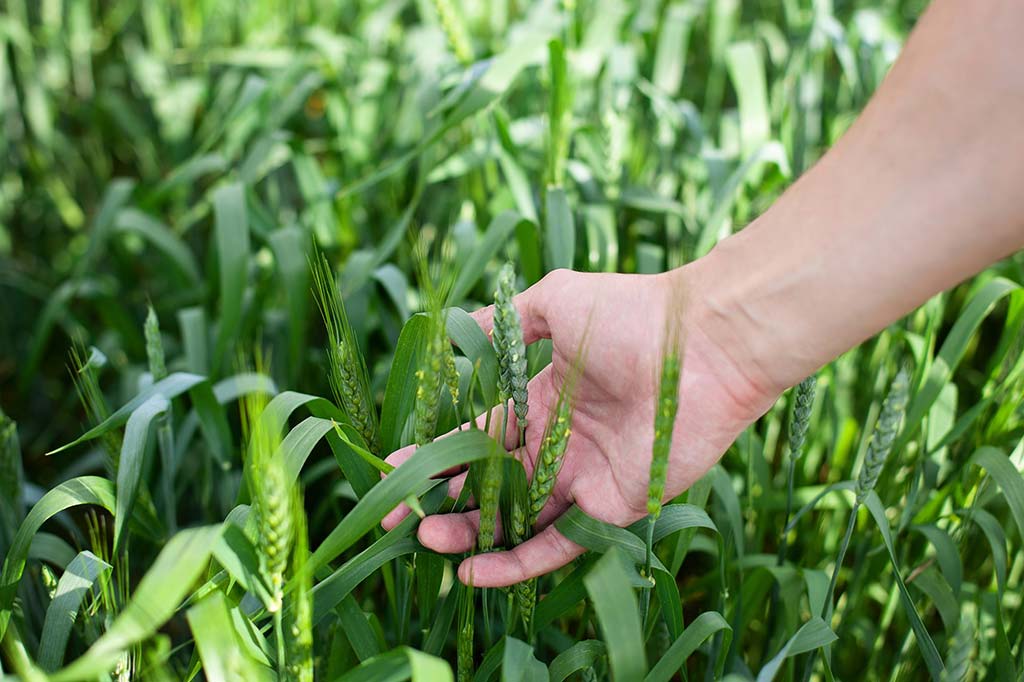 Control is not easy, as preventive measures need to be taken against many species, and some species cannot be controlled biologically, only chemically.
Prevention is an essential step in agriculture, as is continuous monitoring.
Pests that are the biggest problem in small gardens
Many people still have the misconception that pests do not attack smaller gardens, raised beds, patches of gardens with only a few plants, or do not cause as much trouble as in large agricultural areas.
However, small gardens can be attacked just as easily and can pose a threat to the health and well-being of plants.
Rodents can be found in small gardens, as can soil-dwelling pests and lice.
Aphids are also quite common in small gardens, as are potato beetles and mealybugs.
In addition, slugs and house snails can also be a serious problem.
Pest control is easier in small gardens, but prevention is not negligible.