
The latest agricultural market news
2022. February 2.We looked around the market to see what the latest agricultural market news is.
It is therefore not surprising that the Szentes paprika or the tomato-shaped paprika has been included in the collection of Hungaricums.
According to the latest data, the amount of green peppers grown in Hungary is decreasing, as is the amount of land devoted to this crop. In 2017, approximately 2,500 hectares were under cultivation, while by 2021 the area devoted to this popular vegetable will have decreased to 1,527 hectares.
What is even more worrying is that this area has decreased by 75% compared to 2000.
While the amount of land under cultivation has been drastically reduced, the price of peppers has increased steadily: in 2017, they cost 332 HUF per kg, but by 2021, the same amount was 560 HUF.
Despite the decrease in the quantity of green peppers harvested in Hungary (86,100 tonnes in 2020), the quantity exported abroad was 17,200 tonnes (in the first 9 months of 2021), representing a foreign trade asset of HUF 3.47 billion.
The volume of imported paprika also increased: during the same period, the volume of imports mainly from Spain and Morocco increased by 26%.
According to AKI PÁIR data, in 2021, the price of paprika was between 1000 and 1200 HUF/kg at the beginning and end of the year, and between 300 and 400 HUF/kg in the summer, during the paprika season.
The price fluctuations are also reflected in the price of imported California peppers: at the beginning of spring, we had to pay almost HUF 2000 per kg, which fell to HUF 700-800 per kg with the arrival of the domestic product.
Pork and poultry meat prices are rising
Increased feed and overhead costs are slowly being reflected in higher consumer prices for pork and poultry.
According to Attila Csorbai, president of the Poultry Products Council, there are plans to increase poultry meat prices in 3 steps: at the beginning of the year, in early spring and in summer, which will mean a total price increase of 25-30%.
A MSZP MEP said it was time for the government to move on to VAT on foodstuffs, following the example of Poland, in an attempt to control rising prices.
Several experts said that even though wages and pensions had risen, the rapid price rises, inflation and the weak forint would mean that many sections of society would suffer.
Cases of honey counterfeiting
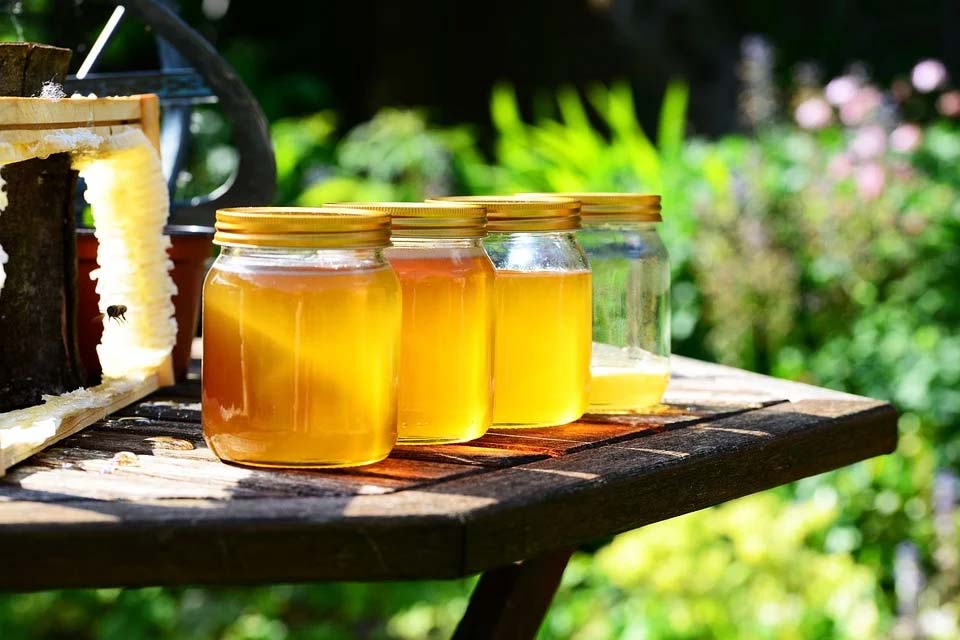 Last year it was shocking news that the authorities found counterfeit acacia honey at several traders, and if that wasn’t enough the price of honey is 60% higher than it was before.
In 2018, we paid an average of 3500 Ft for 1 kg of acacia honey, but by 2021 the price had risen to 5600 Ft.
It is therefore no surprise that many traders are trying to get by by selling fake acacia honey at a low price.
According to the National Food Safety Authority, many traders have been selling largely mixed plant honey under the name of white acacia honey, taking advantage of consumers’ inattention or ignorance.
Labels indicating the place of production and origin are also a problem.
And the real victims of all these scandals are none other than genuine producers and consumers.
How to spot fake honey?
One of the most common practices is to sell honey that is labelled as a more expensive category (in this case, white caviar honey) but is actually from a lower category (such as blended honey) or to misrepresent the origin on the label.
Another trick is adulteration with sugar syrup.
Several solutions have been devised: adulteration can be direct (mixing sugar syrup with honey) or indirect (feeding sugar to bees).
More worrying is the resin filtration technology, which requires considerable laboratory work and chemical knowledge: the honey is heated, pressed through a very fine micro-filter and high pressure, and then the excess water and minerals are extracted.
This operation actually produces a sugar syrup that is lighter than honey, with very little or no nutrients.
If flower pollen from any area is added to this product, it becomes a naturalisable honey.
But then how do you avoid a counterfeit product?
A tip might be to observe the density of the honey offered: acacia honey takes longer to sweeten than other types of honey.
Therefore, if you find a highly crystalline or solid product on the market, it is very likely that it is not acacia honey.
The colour of the product can also tell you a thing or two, with the original acacia honey having a greenish-light yellow tint.
The authorities warn, however, that following all this advice is no guarantee of successfully detecting counterfeit products, as sophisticated laboratory tests are needed to classify a product as a complete or partial counterfeit.
The Hungarian Foodstuffs Code of Practice foresees changes to the labelling of products, which will have to indicate the country of origin of the different types of honey and the proportion of honey present in the final product.