
The budget for the eradication of animal diseases has been exhausted, and the harvest in Vas County has been exceptionally good
2022. August 26.It’s not for nothing that summer is the busiest time in agriculture, with more and more news from the sector.
We have once again selected a selection.
The aid budget has been exhausted
According to information from the CCI, by 2022.
As of 12 August 2022, the aid available to livestock farmers has been exhausted, as the entire annual budget has already been used up.
This aid was available to livestock or aquaculture enterprises which complied with the provisions of Decree 148/2007.
(XII. 8.)
FVM Decree No 4.
§ 148.1.
According to the Ministry of Agriculture, since the entire annual budget has already been used up, applications submitted after 12 August will be rejected, which means that farmers will have to pay the full amount of the invoices.
The aid was intended for the eradication and monitoring of certain animal diseases that threaten livestock and for the prevention of certain zoonoses.
The Regulation covers studies on the prevention of 35 diseases.
The diseases covered by the legislation include:
- swine vesicular disease
- paratuberculosis in cattle, buffalo,
- bovine spongiform encephalopathy or scrapie affecting all mammary glands,
- salmonellosis in all farmed animals,
- snot disease of one-legged animals, etc.
The amount of aid is set out in FVM Decree No 1.
of Annex 1.
The Decree allowed, inter alia, but not exhaustively, the following aid:
- bovine tuberculosis – allergic skin test: HUF 2100 per holding for the first animal, HUF 1400 for 2-5 animals and HUF 560 for each additional animal
- enzootic bovine leucosis – sampling: aid of HUF 2100 per holding for the first animal, HUF 1400 for 2-5 animals and HUF 560 for each additional animal (HUF 1000 for laboratory diagnostic test)
- salmonella pullorum (domestic fowl) – sampling: HUF 2100 per holding for the first individual, HUF 140 for 2-100 individuals, HUF 28 for each additional individual (HUF 500 for laboratory diagnostic test)
- avian influenza (for all bird species) – sampling: aid of HUF 2100 per holding for the first bird, HUF 140 for 2-100 birds, HUF 28 for each additional bird (laboratory diagnostic test: HAG test HUF 840, RT PCR HUF 5500)
Outstanding yields in Vas county
This year, domestic agriculture is in a very bad situation, with the worst drought in decades.
This problem has been compounded by rising prices, especially for pesticides and fertilisers.
The extreme heat has meant that cereal harvesting has had to start earlier.
This year, there is a particularly wide variation in average yields between departments. 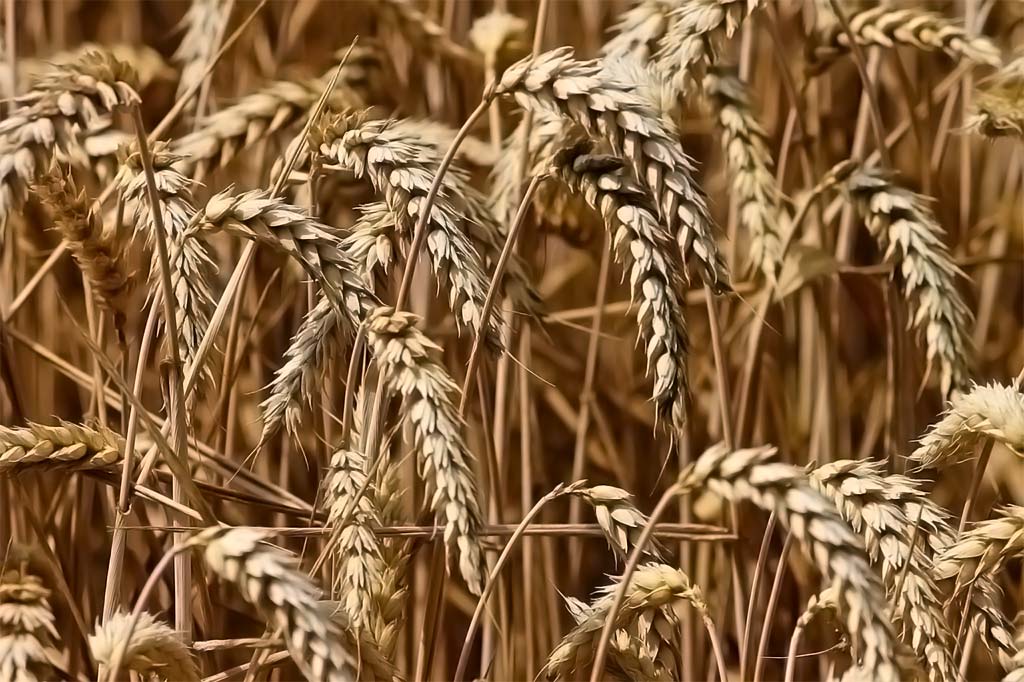 The whole country has been waiting for rain for the last few months, as there has been practically no rainfall for months.
Finally, in the first days of June, the expected rainfall arrived in appreciable and tangible quantities, between 50 and 100 millimetres, which allowed the crops to grow vigorously.
The rain and heat meant that harvesting had to be brought forward earlier than usual.
In Vas County there was also less rain, but despite this the average yields of wheat and winter barley were excellent.
Vas County achieved a yield well above the West Transdanubian and national levels, with an average of 6730 kg per hectare for wheat and 6430 kg per hectare for barley.
In West Transdanubia, the average yields per hectare were as follows, in ascending order:
- Jász-Nagykun-Szolnok county: 2,3 tonnes
- Heves county: 3,1 tonnes
- Békés county: 3,2 tonnes
- Veszprém county: 4,6 tonnes
- Fejér county: 5,3 tonnes
- Zala county: 5.5 tonnes.
Not only has this year been very droughty, but last year was also not very rainy.
This makes this year’s result even more striking.
The drought was particularly severe in the Great Plain, but Vas County was not spared either, with well below average rainfall in both areas.
In Sárvár, for example, 250 millimetres of rain fell for the whole year.
This is very little in itself, but in 2021 it was twice as much, and that period was also considered to be a period of low rainfall.
The outstanding yields are due to the fact that, although the drought was indeed severe and the weather was not optimal for the cereals from the start of sowing, farms tried to make up for this by doing everything they could to help wheat grow.
The ensuing rain put the crown on their efforts.
The grain repaid the care and the rainfall with this good result.
Not only this year, but also the last four years, despite the difficulties, have brought good results in Vas County, and they cannot complain about the grain harvest.
The average yields of both autumn and spring barley were excellent.
Rye and seed peas also produced similarly good results.
These results prove that cereals are in the hands of competent farmers.
However, the case of rapeseed is interesting and striking, where the situation is poor.
This is also incomprehensible, because its rainfall requirements are equivalent to those of wheat, yet there is a steady decline in the average yield.
Experts believe that this is due to the proliferation of pests and the lack of pesticides to combat them.
However, this seems to be contradicted by the fact that farmers in Békés county can produce a good average yield – even without irrigation, because they constantly monitor the development of rape and take the necessary measures if necessary.