
Problems for beekeepers, new conservation options
2022. May 16.Below you can find out what the latest agricultural news is in the last month of spring, when the weather is almost summer.
The NÉBIH inspection is over
Last month, the regional food chain inspectorates, under the direction of the National Food Chain Safety Office (NÉBIH) as the authority, carried out a nationwide inspection aimed at ensuring that the public has access to safe, edible, good quality food, even if the turnover during the Easter period is higher than usual.
Food of unknown origin should not be allowed to enter the market.
Not only markets and shops, but also catering establishments were subject to controls.
Meat and meat products were checked as a priority, as well as the production of confectionery products, egg packing, primary vegetables and fruit, and the ready-cooking of frozen and chilled bakery products.
At national level, 2 750 inspections were carried out, 35 warnings were issued and 197 fines were imposed.
The total sanctions imposed amounted to 13 million HUF.
In 12 cases operations were suspended.
Non-compliance with hygiene standards was found to be the main problem, as well as shortcomings in traceability.
A total of 13,372 lots of domestic and foreign origin were checked.
Nearly 600 catering establishments were inspected, 66 of them had hygiene problems and 20 had problems with traceability.
The number of checks this year was much higher than two years ago, but the quantity of food withdrawn from the market was also much lower in absolute terms.
The number of checks was 53% higher than in 2020 and the value of withdrawn goods 66% higher.
However, there was no problem with the alcohol content of beverages, with rapid tests showing no discrepancies.
Inspectors found shortcomings in primary and seasonal products, mainly due to marking, and made quality complaints.
Traceability was negligible in the case of fruit and vegetables, with 4 cases of non-compliance.
A total of 504 distributors were checked.
Due to the Easter holidays, the focus on meat products and sweets was very high, with positive results and a very low number of cases.
Winter caused serious damage to the domestic bee population
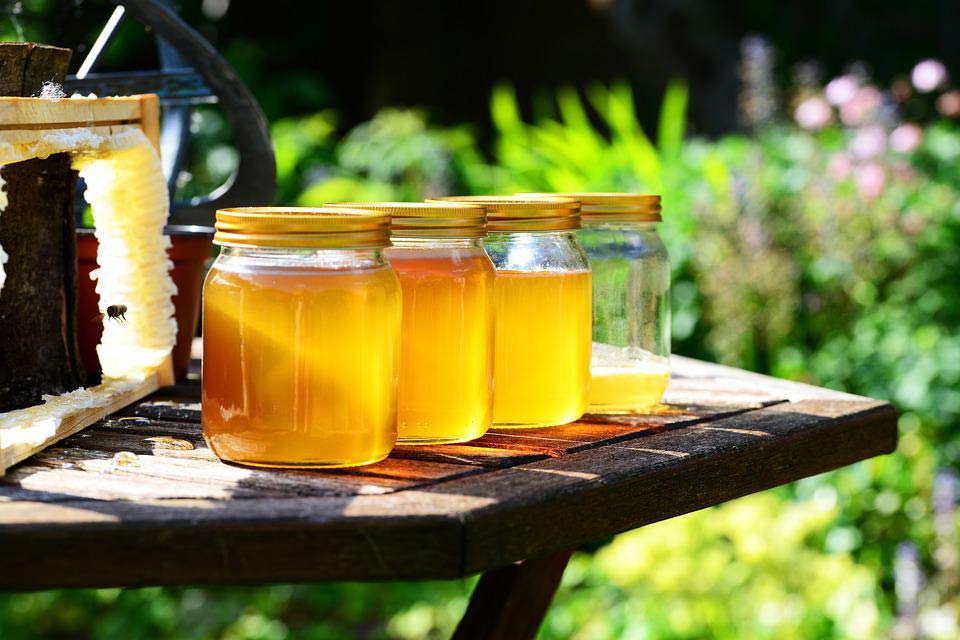 A bad start for 2022.
The year ahead for bees.
The winter has taken a heavy toll on domestic bee colonies, with a fifth of them dying and a further 20 per cent weakened.
It is fair to say that the population has practically halved, so that around.
600-700 hives are in good health and can start collecting honey.
In addition to the professional shortcomings, experts suspect a negative environmental impact, specifically poisoning from spraying.
Beekeepers are doing their utmost to increase the number of families again, even if it means not only a lot of work but also extra expenditure.
At the moment, rape, linden and acacia are in bloom, all of which are popular honey sources.
The 20,000 beekeepers are therefore constantly at work, managing the hives and spraying the honey.
Honey production in Hungary has fluctuated considerably over the last 20 years, with a peak of 32,000 tonnes in 2017.
The negative peak was in 2001.
In 2001, there was a record low of 12 thousand tonnes.
The year 2020 was similar, with only 14 thousand tonnes.
The sector is in dire need of public support.
This year, the subsidy is 1,000 forints per family, and there is also a three-billion-euro state programme.
On top of this, the government has earmarked HUF 10 billion for animal welfare tenders.
In recent years, there has been a growing focus on the continuous monitoring of honey, as cases of adulteration have increased and non-nectar sugars are often found in honey.
New scent traps help in the fight against
Researchers at the Plant Conservation Institute of the Agricultural Research Centre have developed scent traps that are effective in controlling the juniper beetle and the juniper weevil (big bark beetle).
They have analysed the components of emerald thuja scent and extracted the compounds that attract these pests.
Using scent traps, swarming can be predicted.
One would never imagine the damage that the previously protected insect can do to tulips and cypresses.
At first the damage seems to be aesthetic, but the plant soon dies.
Therefore, the attacked parts should be burnt immediately after cutting to prevent the beetle from reproducing and causing further damage to the plant.