
Nutrient replacement in agriculture
2023. February 23.When we talk about arable crops, it should be added that high yields and high quality yields can only be achieved with the right variety of hybrid.
To this must be added nutrient replenishment, without which it is no longer possible to meet the needs of plants.
In this article we explain how these are replenished in today’s agriculture.
What happens to plants when they are in short supply?
When a plant, cereal or vegetable does not get the right amount of nutrients, water and light, you can be sure that its quality will not be up to expectations.
This is of course influenced by the climate and the weather, but we cannot blame it all on these factors alone.
In fields that are not equipped for irrigation, the possibilities are limited.
Although it is possible to try to replenish nutrients, without water there is no chance of getting anywhere.
The drought in the hot summer of 2022 is a good example, as almost nothing could be harvested in the lowlands.
So rainfall and water are essential for plants, and the next important thing is to distribute nutrients properly.
Cereals, vegetables and fruit require different amounts of different nutrients.
Not all of them can absorb all of them in the same form, so it makes no difference how they are replenished.
Some nutrients are present in plants in larger amounts, others in smaller amounts.
The former are mainly nitrogen, calcium, potassium and magnesium.
The latter include manganese, leather and zinc.
In the case of plants, moreover, all their organs are involved in nutrition, so it is not only the roots that need to be supplied with nutrients.
The different species take up the nutrients through the leaf cells and transport them to their body.
It is therefore worth spraying it on the leaves.
Apart from the uptake of oxygen and carbon, the root system plays a key role in the uptake of nutrients by the plant.
Uptake through the foliage and leaves is only secondary, and in some cases only primary.
Nutrient supplementation with modern technology
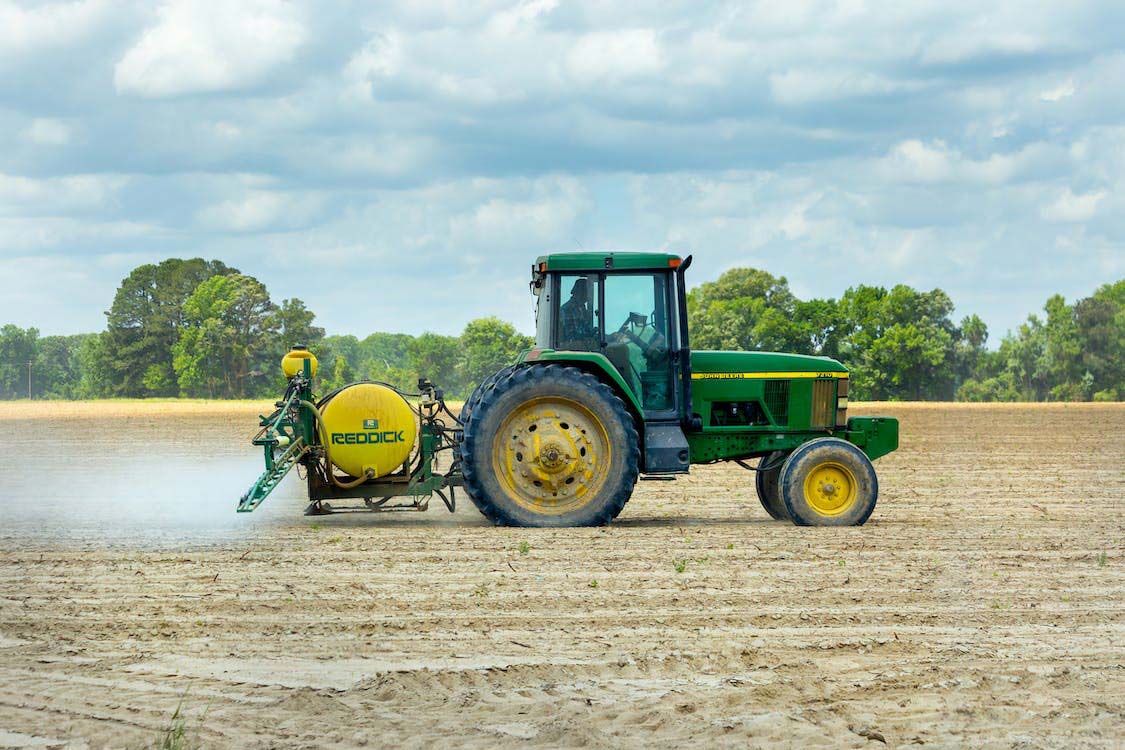 Today’s modern technology has reached the point where we can introduce almost anything into the plant’s organism.
Unfortunately, we are now in a situation where the amount of nutrients needed to achieve the yields and quality of the crop cannot be taken up by the individual varieties from the soil, which is very poor.
The nutrient supply capacity of the soil is not nearly what it used to be, so fertilisers are needed.
In better soils, replenishment is needed to reach a certain yield level, just as it is in poorer soils.
At most, crops need less, but almost no farm can function without fertiliser.
This is why a fertiliser spreader is essential for a company with a large area, as it makes replenishment much easier.
The main macro-elements that need to be replaced are the primary ones.
And thanks to this intensive fertilisation process, we are no longer so vulnerable to the soil’s natural nutrient supply capacity.
As agriculture has started to use chemicals, we have started to use organic fertilisers less and less in production.
The use of livestock manure has also declined sharply, depriving soils of significant micronutrient replenishment.
What are the benefits of foliar fertilisation?
First and foremost, this method eliminates most of the factors that inhibit absorption from the soil.
There is less dependence on the soil conditions on how the plant can process the amendment.
Moreover, in this case the nutrient can act easily and directly, almost immediately.
It is easier to administer, so that the plant’s development can be monitored and additional supplementation can be applied if necessary.
The main advantage of foliar fertilisation is also that micro-nutrient requirements can be met quickly and any deficiencies can be easily and quickly remedied.