
Get ready for the irrigation season
2023. March 31.As spring arrives, the irrigation season starts.
Although soil moisture conditions are fortunately quite good at the moment, it is important to make sure that water is replenished.
After the huge damage caused by drought in the last farming year, it is time to do something to prevent this from happening again.
In this article, we’ll go into more detail on how to prepare for this year’s irrigation season.
How to cope with water scarcity?
Almost every year, the question of how to cope with a prolonged period of water scarcity is being asked earlier and earlier by farmers.
The solution, of course, can come from many directions, with breeders, for example, working to develop crop varieties that can tolerate more drought.
It may also be necessary to promote species that have been marginalised for some time.
One example is sorghum, which in many ways could be a good solution to drought damage.
Most importantly, however, water retention should be addressed and irrigation facilities should be developed in places where this is feasible.
A lot of investment has already been made to control, retain and meet the various water needs.
In the Great Plain, for example, a HUF 6 billion project has already been completed to help the area to reduce the impact of drought on crop production.
The issue of irrigation development
There is still a lot of untapped potential for irrigation development.
Two years ago, for example, only half of the 174 hectares of water-legally permitted irrigable area nationwide was being replenished.
The aim is therefore to double this in the next 1-2 years to reach 200,000 hectares.
Following this, the government envisages that 350 hectares of irrigation could be achieved by 2030.
What about agricultural irrigation wells?
In Hungary, the National Land Centre is responsible for the authorisation of these devices.
This means that if someone wants to drill a well for agricultural purposes, a prior notification is required, which is then approved in good cases and construction can take place.
For wells that have been drilled in the past, registration can be applied for, but only if some conditions are met. 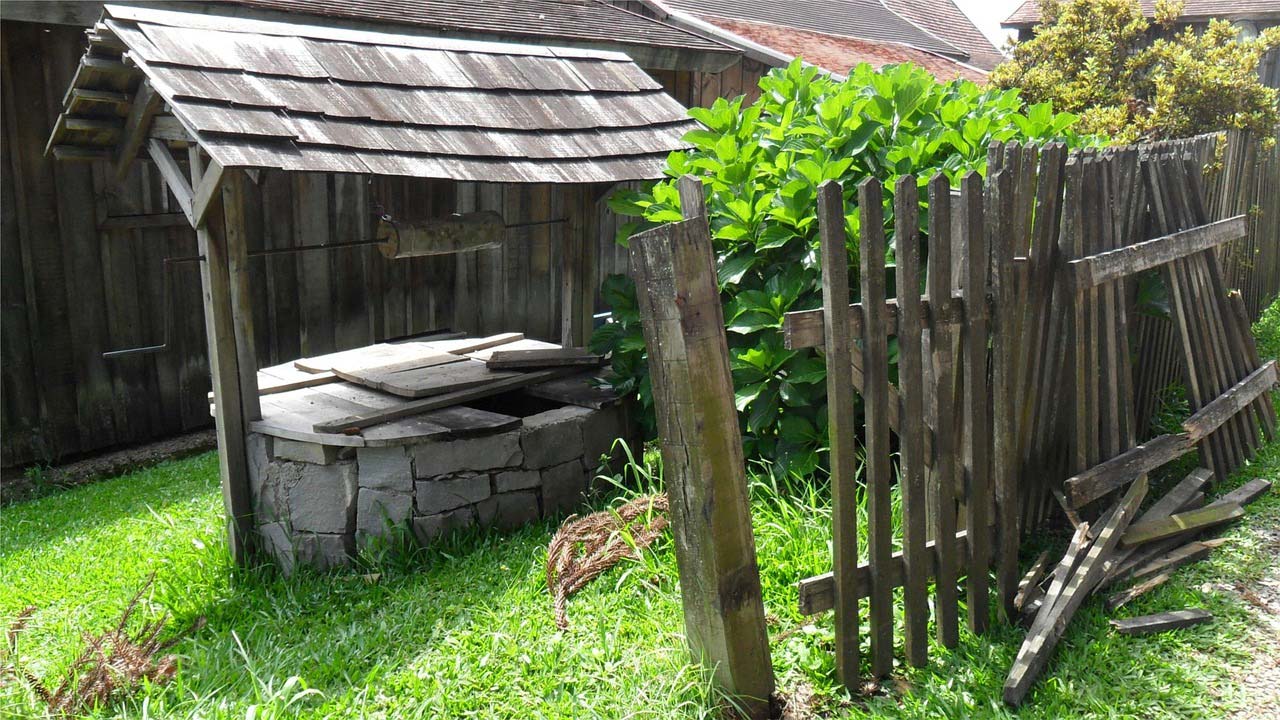 One of these is that the well does not affect any protected or protected water bodies.
The bottom depth of the well must not exceed 50 metres and must not reach the first aquifer.
It may be connected to an irrigation system only if it is used for the irrigation of areas under the operator’s cultivation.
In addition, it is important that, once the notification has been approved, the well must be equipped with a digital well water meter to measure the volume of water during construction.
Investment or tender?
As with everything, there are applications for wells.
As the investment requires a lot of preparation if you want to use grant funding, it is worth thinking twice.
Almost every year, new opportunities are announced, but these are not only for the installation of the well, but also for the purchase of machinery for maintenance, the dredging of the canals and the purchase of self-propelled excavators.
What to do with garden wells?
Some people do not necessarily have a well for agricultural purposes, but may want to install one at home.
Lately, many people have been thinking that a well could be a good solution to water shortages, as it would make up for some of the shortage and would have less impact on kitchen gardens and plants.
In this case, the same formal procedure should be followed.
A report should be made to the notary of the municipality, who has the authority to manage water.
If this is not feasible, the other option is to contact the county disaster management directorate, which has water management and water protection powers.
They should be contacted if you want to drill a completely new well.
The design, depth and use of the wells are determined solely by the needs of the use and the location.
The depth is not necessarily a matter of choice, especially in certain areas, as the depth and quality of the groundwater in a given locality is always the decisive factor.
So now is the time to make sure that irrigation is not a problem in the season.