
End of an era: a new world of agriculture begins
2024. February 27.Nowadays, no one can afford to miss the use of precision technologies, neither robotisation nor automation.
The integration of digitalisation is also needed in fruit and vegetable production, but it is very important for farmers to develop a sectoral strategy, as there are plenty of resources available to develop it.
These periods have alternated, with areas that have had twice as much rainfall, while the lowlands have had hardly any.
There were also many challenges in terms of processing, so it is no wonder that more and more people are switching to automated processes.
It is clear that food production is key, without it there is no agriculture, no farming.
But the sector needs producers, processors, buyers and of course the retail sector to work together.
Aim for the next period
In the coming years, the main challenge is to develop a producer cooperation that will fundamentally define the market.
This will serve a secure future, as it is already apparent that there are shortages in many areas.
In areas where they used to produce food in significant quantities, weather events have occurred that prevent them from continuing their activities to the same extent.
Every year farmers wonder whether the risk is worth it.
Business leaders are already talking about the need to find new sources of energy, to improve machinery, to robotise it, in fact to digitalise agriculture.
In addition to real-time weed detection, today’s equipment is capable of localised spraying, but autonomous machines are becoming more common, so the market is slowly being transformed.
The future will therefore focus on knowledge, education, development and experience.
Experts believe that within 5-10 years, almost fully autonomous machines will be available, as developments are already underway.
The age of hardship
The problem is that the next period will bring new challenges for farmers.
Inflation, fuel price developments, real earnings and the fertiliser market could all cause problems.
The financing and interest rate environment is not looking good either. 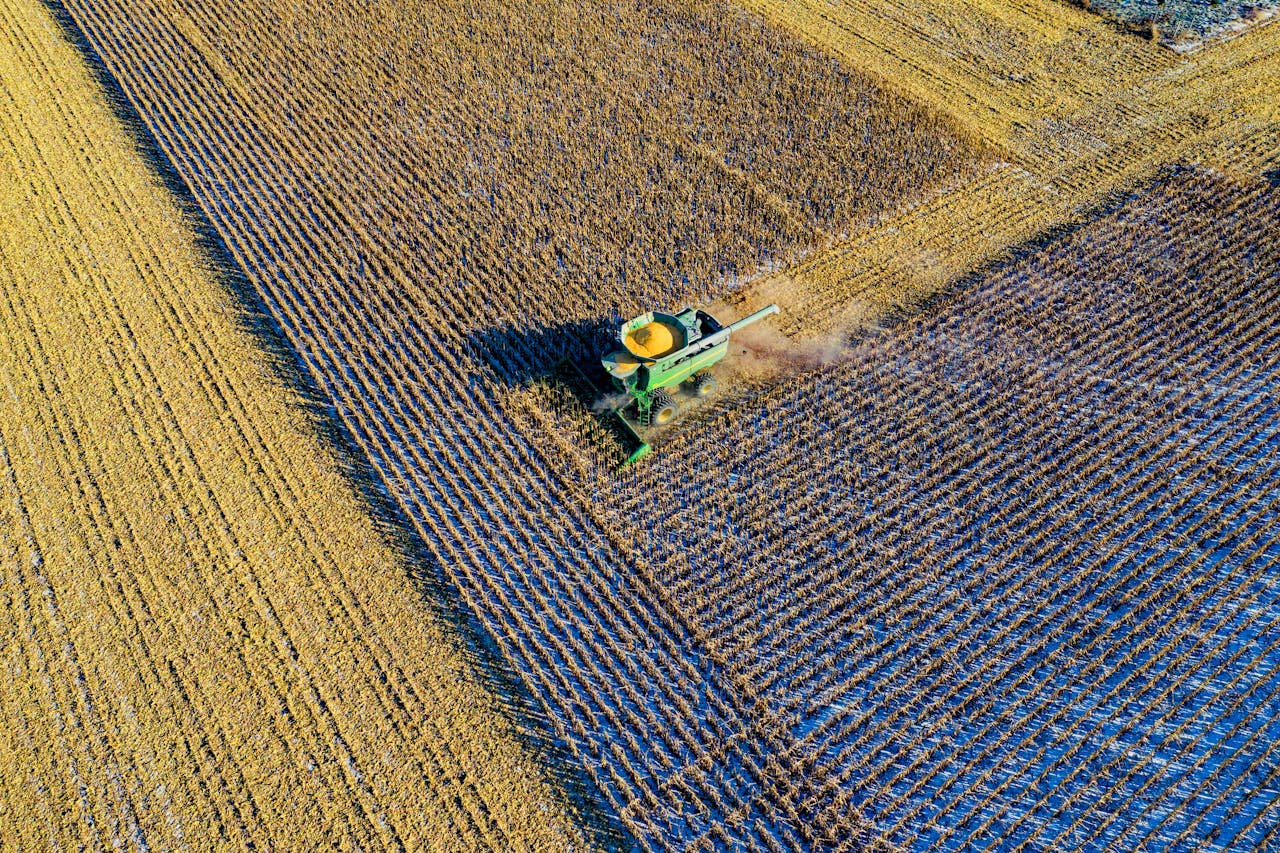 In addition, investment in machinery has also fallen significantly.
The figures for 2023 have not yet been released, but it is certain that manufacturers of agricultural machinery will have seen a decline of HUF 40-45 billion compared to 2022.
Although the start of the year was strong even last year, over time everyone slowly slowed down and bought less and less.
This is no longer the world
According to experts, the cost efficiency of production increases in proportion to size.
Some farmers will give up farming by 2040, driven by the demand for greener production and the ageing of more populous generations.
German analysts, for example, predict that the 256,000 farms in 2022 will fall to 100,000 in 2040.
Sustainable and green production will play a major role in this, which will require very expensive investments.
Everything will have to be measured and proven, which would require huge amounts of capital.
This means that entry into agriculture will be much more difficult, dynasties may emerge from the old farming community, while other farmers will go out of business.
Of course, there is no need to bury anything yet, but it is certain that agriculture, production and machinery will undergo a spectacular transformation in the coming years.
From 2025, farmers over 60 will slowly disappear, and from 2030 they will leave the field en masse.