
Agriculture news
2022. June 9.Good news from the dairy sector, the NAK’s monstre agricultural exhibition has come to a close.
Good news from the agricultural sector, as there has been a significant increase in Hungarian dairy production over the past decade, which is strongly supported by the government.
Meanwhile, the NAK Monstre agricultural exhibition in Mezőfalva has come to an end, which all participants considered a success.
Serious increase in milk production in Hungary
In our country, milk production has increased by 26 percent over the past 10 years.
Of course, this has taken a lot of work, conscious improvements, cooperation between producers and processors, and help from retailers.
This positive picture is somewhat overshadowed by the fact that the sector has still not reached the 2003 level of production of milk and milk products.
This is a positive sign for the EU as a whole, which is still well below the level of 2003, when annual milk production was 1977.3 million litres, and 2020.
In 2020, it will be only 1961.4 million litres.
2003.
Since 2003, milk production has been on an almost continuous downward trend, reaching a low of 1640.6 million litres in 2010.
From this level, the sector has gradually recovered.
In parallel with the increase in milk production, exports increased by 2.1 times, which is an outstanding result.
2015.
The total value of improvements since 2015 was HUF 25 billion.
The state has also focused on milk processing, spending HUF 7 billion on this.
Improvements are ongoing, with a target of 2020.
After 2020, it will again be possible to apply for technological upgrades, with 300 cattle farms applying for HUF 123 billion in upgrades.
In addition, 14 other projects worth nearly HUF 10 billion are still open for applications to enable the sector to produce higher quality products, both domestically and for export.
The bad news is that the gap between the average consumer price of cow’s milk and the average purchase price is widening, with the latter being less than half the average consumer price.
Meanwhile, prices are slowly but steadily rising, albeit with a downward trend.
2002.
In 2002, the price paid to producers was 72 cents per litre and the price offered to consumers was 155 cents per litre.
The low point for the buying-in price was in 2009, when it fell to 61 HUF/litre, but the fall in shops was not as marked, with 201 HUF being paid for a litre of pasteurised milk with a fat content of 2.8 %.
Last year, buyers paid 114 forints per litre, while the average price paid by consumers was much higher at 270 forints.
Milk consumption has been increasing almost steadily over the last 5 years, with 2017 alone showing a slight increase.
The only year with a minimal decline was in 2007.
In 2020, annual per capita household consumption of milk was 56.7 litres, 3.7 litres more than in 2015.
3.7 litres per litre in 2015. 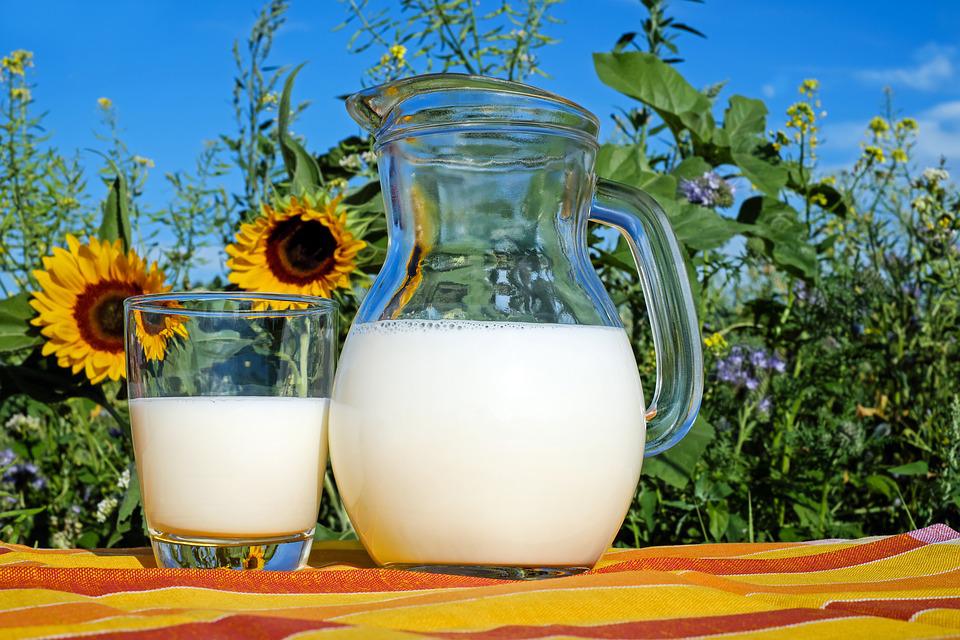 The President of the National Chamber of Agriculture, Balázs Győrffy, mentioned that the problems are expected to intensify in the coming years, with a significant increase in raw material prices expected in this sector as well.
The shortage of sunflowers as a result of the Russian-Ukrainian war is expected to lead to a renewed increase in the use of butter.
The NAK agricultural event was a success
The NAK Arable Land Days and Agricultural Machinery Show was held again recently in Mezőfalva, where the Minister of State for Agriculture and Rural Development of the Ministry of Agriculture emphasised in his speech that nearly one million hectares of arable land have been included in the agri-environmental programme.
He stressed that the conversion to organic farming was a priority in the calls for proposals.
He also informed the audience that farmers have committed to not only preserve the condition of their land, but also to reduce environmental pressures in order to maintain genetic diversity and mitigate climate change.
To this end, the Hungarian state is providing subsidies to help purchase 7,000 pieces of machinery and equipment suitable for precision farming, thus helping to promote competitiveness and sustainability.
The State Secretary also said that in the current situation, farmers have to take several things into account at the same time, as they need to optimise not only the use of fuels, but also of pesticides and energy, while at the same time adapting to climate change.
Otherwise, production yields may already be reduced in the near future.
The need to pay close attention to water retention, the establishment and maintenance of good soil conditions, the use of varieties, erosion control, water and air safety is becoming increasingly important.
The President of the Association of Hungarian Farmers’ Groups and Cooperatives also spoke about water management.
He said that particular emphasis should be placed in the future on making the best use of available resources.
Surface water must not be allowed to run off, it must be used, because if these efforts are not made, huge losses could result.
This could be the key to significantly increasing agricultural output.
Failure to retain and recycle surface water could be a blow to the agricultural sector.
In the President’s view, professional developments and innovations only make sense if they are put to good use, i.e. become part of everyday practice.
To this end, it is necessary to learn about innovations.
Slowly but surely, food management is gradually coming to the fore and will play an increasingly important role in the near future, but the growing demand cannot be fully met without innovations and their application in practice.
There is an increasing need for good machinery and professionalism.
The success of the NAK’s event is demonstrated by the fact that 80% of the companies selling agricultural machinery in Hungary took part and hundreds of students interested in the profession were able to get a taste of the real work.