
Horsepower vs. Torque: How Much Does Performance Matter in Heavy-Duty Earthwork?
2026. June 2.In the world of agricultural machinery, the question often arises: what matters more in a tractor—horsepower or torque? Many farmers primarily consider engine power—or horsepower—when purchasing machinery, even though torque plays an equally important role in heavy soil work. The two factors are therefore closely related, yet they influence the tractor’s work capacity in different ways.
What does “horsepower” mean in the context of agricultural machinery?
In modern agriculture, where increasingly larger machines must be towed and the time windows available for completing work are becoming ever narrower, it is crucial for farmers to understand the concepts of power and torque. This is especially true for tillage operations, where machines must overcome significant resistance.
Horsepower is one of the most widely used units of measurement for engine power. It indicates how quickly an engine can perform work. The higher the number, the faster the tractor can transfer energy to the drivetrain and the implement.
High horsepower is particularly advantageous when using wide-working-width implements to cover large areas. For example, during seeding, spraying, or transport tasks, it is the power output that determines the pace at which the machine can operate. A high-horsepower tractor can move the implement faster, which increases daily output and also reduces operating costs.
However, it is also important to realize that horsepower alone does not guarantee that the machine will be able to work effectively even under difficult soil conditions. This is where torque comes into play.
The Real Driving Force
Torque essentially refers to the engine’s rotational force. It is the force that enables the tractor to move heavy implements and overcome soil resistance.
During plowing, deep loosening, or heavy cultivation, the tractor is subjected to constantly changing loads. Soil consistency, moisture content, and working depth all have a significant impact on resistance. Under these conditions, high torque is often more important than sheer horsepower, as it allows the engine to handle heavy loads without a drop in RPM.
This is another reason why manufacturers are placing increasing emphasis on torque flexibility. This means that the engine is capable of delivering significant torque even when engine speed drops, which reduces the need to shift down and ensures a smoother work process.
The Role of Traction and Ground Contact
Horsepower and torque alone do not guarantee good performance. It is just as important how the tractor is able to transfer this power to the ground. One of the challenges facing today’s machines is reducing soil compaction. Heavy machinery exerts significant pressure on the soil, which can damage its structure even in the short term and, over time, lead to reduced crop yields.
This is precisely why wide tires, twin wheels, and track-type undercarriages have become widespread, as they distribute the machine’s weight over a larger surface area. Better traction not only helps protect the soil but also allows for more efficient use of the engine’s power and torque. In the case of a tractor with poor traction, a significant portion of the energy is lost due to wheel slip.
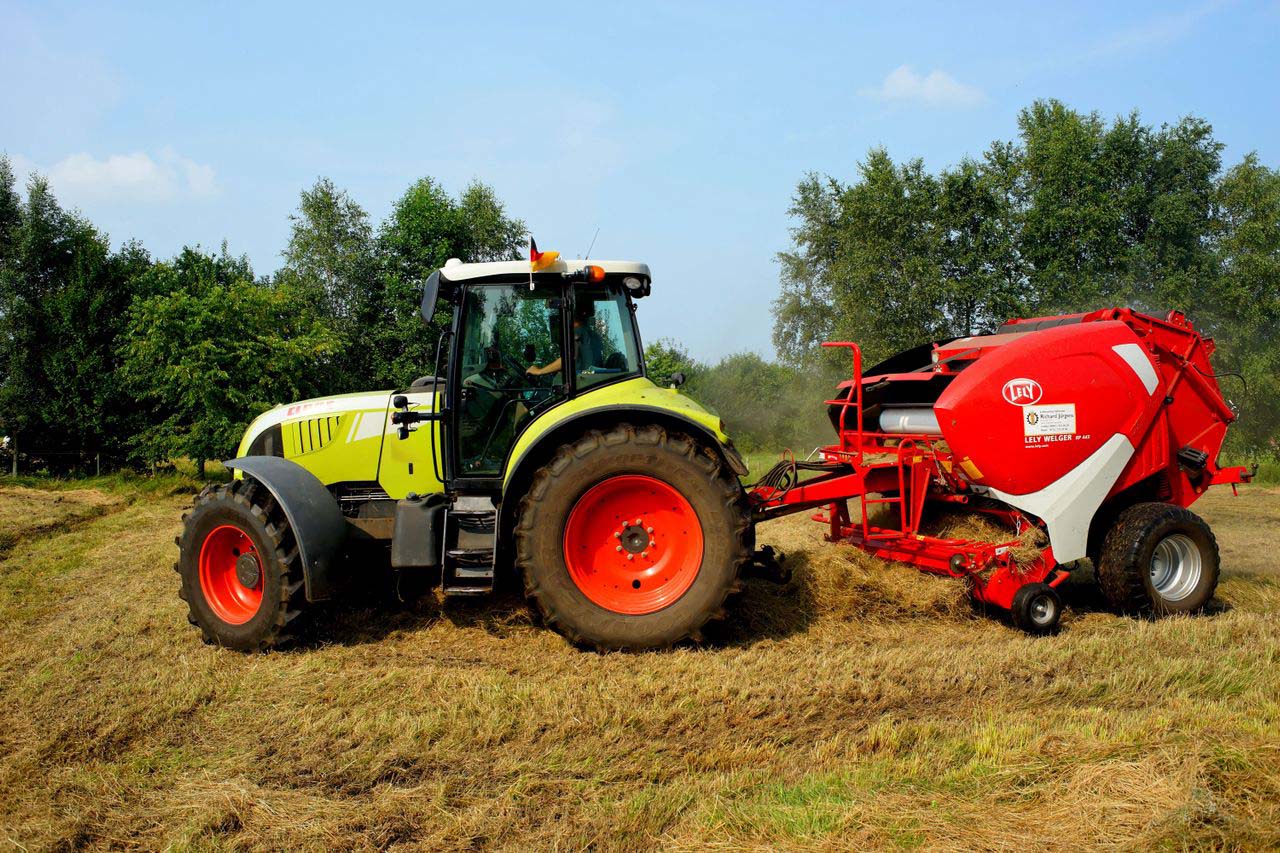
With modern machines, manufacturers now focus not only on engine specifications and performance, but also on optimizing the entire drivetrain, weight distribution, and suspension. Together, these factors contribute to efficient production.
What kind of tractor should we choose for heavy-duty soil work?
If deep plowing, subsoiling, or cultivator work requiring high tractive effort, it is advisable to choose a tractor that not only has high horsepower but also significant maximum torque and favorable torque flexibility.
The main advantage of modern engines is precisely that they are capable of delivering high torque even at low RPMs. This can result in better fuel economy, all without compromising the machine’s power or performance.