
Beyond the tractor: machines that are rewriting the rules of farming
2025. September 10.Agriculture has been part of our everyday lives for thousands of years, it is the basis of our lives. But in recent decades, things have changed so rapidly that even farmers and consumers are often left scratching their heads. The tractor was the tool that was the basis of modern agriculture, because it was power, mechanisation and efficiency. Today, however, there are a number of tools and technologies that go beyond traditional mechanisation and are significantly changing the rules of farming. These are not just tools, but key points for the production of the future.
Accuracy to the centimetre
The essence of precision farming is that the farmer adapts all interventions, be it sowing, irrigation, nutrient replenishment or plant protection, to the conditions of the given area. Whereas in the past a field was treated as a single entity, nowadays maps of the soil, crop development and moisture content are produced using sensors, satellite navigation and drones.
And GPS-controlled machines can sow seeds to within a few centimetres, so less seed is wasted and the space between rows can be better utilised. Smart sprayers apply chemicals in a targeted manner, in many cases only where they are needed. The result is more cost savings, not to mention reduced environmental impact and improved yields.
Use of drones and robots
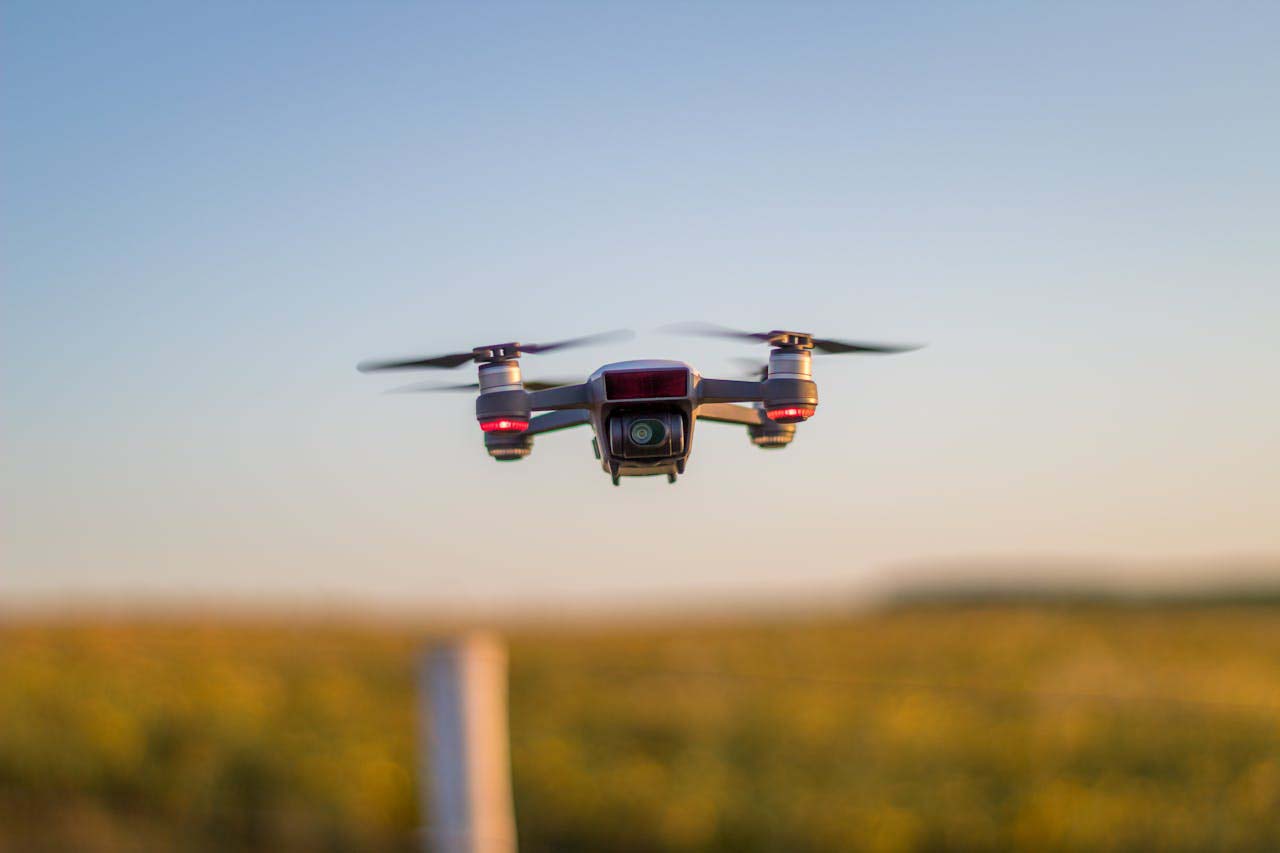
Drones are at the heart of modern agriculture, the most spectacular tools that have gone from hobby to essential in less than a decade. Aerial photography shows where there are water shortages, pest infestations or nutrient deficiencies. There are also models that can spray, so they can quickly intervene in places that are difficult to reach.
Robots working on the ground are equally popular, which is no coincidence. The self-propelled weed-killing versions use artificial intelligence to distinguish between crops and weeds. They target and destroy unwanted plants. In contrast, other robots can even harvest tomatoes, strawberries or even apples. This is particularly important in areas where labour shortages are already making farming difficult.
No production without automatic irrigation
Climate change has made water management one of the most critical issues in agriculture. Traditional irrigation is often wasteful, with much of the water evaporating or flowing to places where it is not needed. Smart irrigation systems, however, sense soil moisture and weather data and irrigate only when and as much as is actually needed.
And sensor networks continuously collect data on soil pH, temperature and nutrient content, which is transmitted to farmers in real time. This allows them to monitor changes in crop conditions via their phone or computer, taking the guesswork out of the process and allowing them to make data-driven decisions.
Decision support in farming
However, data is not always enough, as it also needs to be analysed, which is where artificial intelligence can be of great help. It gives farmers interpretations and suggestions, predicts which pathogens might cause problems under the given weather conditions, and which fields will yield the most. However, these systems can be useful not only on larger farms, as they are also available for smaller farms, giving anyone the opportunity to become efficient.
The social and economic consequences of modern farming
New technologies are transforming not only production, but also the work of farmers, their daily lives and rural society. In many places, machines are replacing human labour, which can be both a relief and a challenge. For the younger generation, digitally supported agriculture can become more attractive, which in turn can help to prevent the depopulation of villages.
But it also means that the investment to buy this machinery is often huge, which raises the question of whether smaller farms will be able to keep up. Machine sharing and rental services could also be a solution to this problem, and it is not only larger farms that could benefit from the technology.