
That is why a poorly configured machine is more expensive than the machine itself
2026. September 10.When we buy agricultural machinery, we’re not just buying a vehicle for a few years. Whether it’s a tractor, a seeder, or a combine harvester—when considering these machines, you always need to look at the machine’s performance capabilities, its working width, its fuel consumption, and its purchase price. But there is perhaps an even more important factor that determines how a farm operates: how the machine is set up and how it is used.











It’s not all about money
The agricultural machinery available today can only deliver the proper performance if it is adjusted to the specific task, soil, crop, and conditions. Failure to do so can not only lead to breakdowns but also result in higher fuel consumption and inconsistent working depth. This, in turn, will affect crop yield and germination rates.
So it’s important not to focus solely on the price. That’s not what determines how much it will cost to use a given piece of equipment. Fuel, maintenance, wear-and-tear parts, as well as labor hours and potential losses are the factors that add to the machine’s operating costs.
Not to mention that in agriculture, it is very important that everything be completed on time. Soil preparation or seeding cannot be postponed indefinitely, as the weather and soil conditions strongly determine the appropriate time to perform the work. If a machine isn’t working properly—if it moves more slowly or requires multiple passes over a given area—it will affect more than just fuel costs.
There is no one-size-fits-all setting that works for all soils
It’s a very common mistake for a farmer to try to use the machine with its factory settings. But let’s be honest: who uses the exact same settings for every type of terrain in agriculture? Optimal settings may differ between dry and wet soil, and different settings may be required for specific soil types, since both working depth and seeding parameters vary. And an agricultural machine operates economically not only when it is in proper technical condition, but also when it has been adjusted for the specific task at hand.
Excessive fuel consumption
It probably goes without saying that fuel is one of the most expensive components of agricultural machinery. That’s why the type of equipment we use matters. Operating a machine at a higher power setting than necessary can, in and of itself, result in significant losses.
For example, if we set a tiller to a deeper depth, the traction resistance may increase, which can ultimately result in a higher load on the engine and, consequently, higher fuel consumption. We face a similar problem when the working speed is inappropriate, since in certain cases neither a machine that’s too fast nor one that’s too slow is ideal.
You have to pay for quality work
However, a poorly adjusted machine not only consumes more fuel, but there is also a high probability that the quality of its work will not be ideal. In soil preparation, for example, improper surface finishing can be a problem. And when sowing, uneven seeding depth or improper seed spacing can lead to problems with germination. It is therefore very important that, if we want our equipment to work properly, we operate it with the ideal settings for the task at hand.
Improper settings affect soil conditions
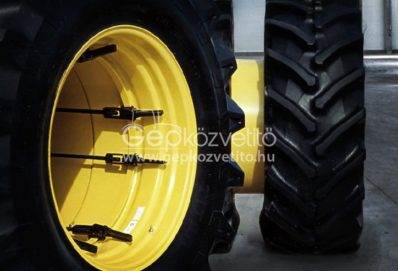
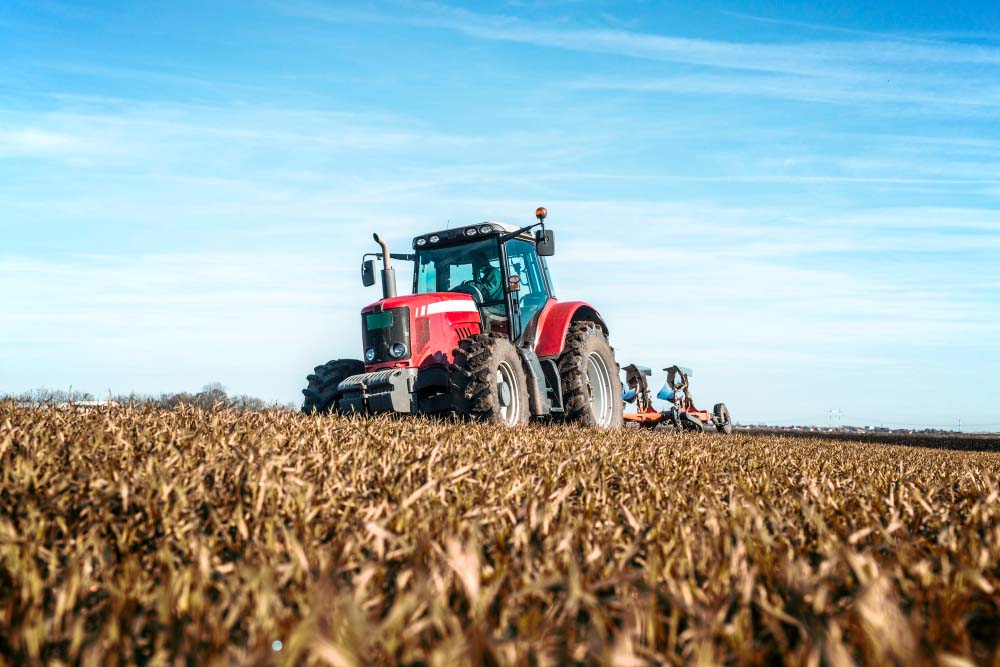
When it comes to agricultural machinery, working with incorrect settings can also affect soil condition. Excessive load, improper tire pressure, or unnecessary trampling can cause compaction. All of this can degrade soil condition in a matter of moments.
Excessive load, improper tire pressure, and unnecessary trampling can cause soil compaction. Why is this a problem? Because it can damage the soil structure, which in the long run may even affect plant growth and crop yield. According to experienced farmers, excessive surface load can reduce the soil’s pore volume and impair water and air circulation, which can result in lower yields.
An agricultural machine may be the most expensive and best-equipped, but it’s useless if there’s no one to operate it. The operator’s experience and attention to detail are just as important as the type of machine itself. It is therefore important to consider, even at the selection stage, who will be at the controls and what knowledge and experience are needed for that particular machine to operate effectively.