
Basics of precision farming
2024. May 30.About 30 years ago, precision farming was called smart farming.
However, as technology has evolved, the concepts have changed significantly and a new term has emerged that is more site- and time-specific.













Variety to contend with
In some areas, the diversity is so great that local farmers find it very difficult to cope.
In the past, this was solved by trying to delimit agricultural areas into fields within which they could say that the conditions were roughly the same.
The expectation here was that everything should happen at the same time, from the moment of emergence, through to stem break, ripening and harvesting.
The other direction was the increasing use of large machines, which made the fields bigger and bigger, and thus precision farming.
This means working with the same machine, the same attachment, the same structure, the same system.
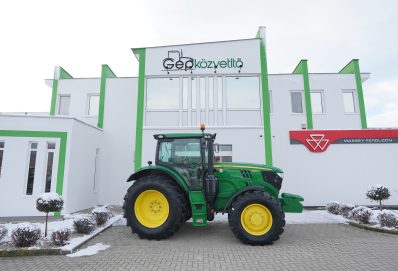
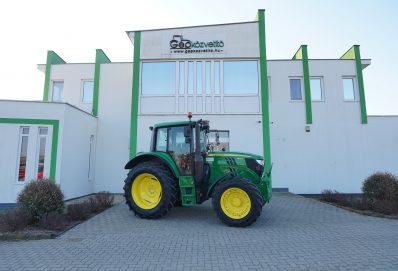
This agricultural equipment actually sets the number of inches, the amount of chemical or whatever the farmer wants.
The new solution contributes to optimum soil cultivation, as the working depth, which is a decisive factor in cultivation, can be controlled.
Another important factor is soil quality and soil fertility, which could not be achieved without machinery.
In addition to these factors, there is also the time factor in farming, since many procedures can only be carried out in the right weather, and some soil conditions are not suitable for machinery to be used.
To be effective, everything must be coordinated, and neither sowing nor harvesting can be delayed or postponed.
Agrotechnical and environmental conditions
There are therefore agrotechnical and environmental conditions that need to be played with to maximise the quantity of product.
All this is backed up by very serious logistics, for which agricultural equipment is also now available.
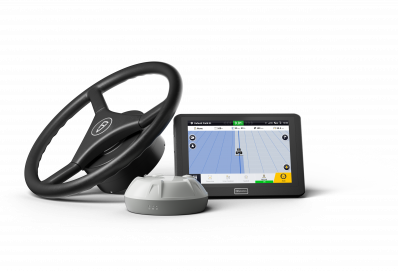
We have now reached the point where we have a fleet of machines that can navigate, that know what they are doing inch by inch.
You can see the surface from space, you can use drones to map the crop, the leaf surface, the changes within the field.
But farmers don’t always want to get that deep into it.
They are waiting for help, looking for advice on what machines to buy and how to use them.
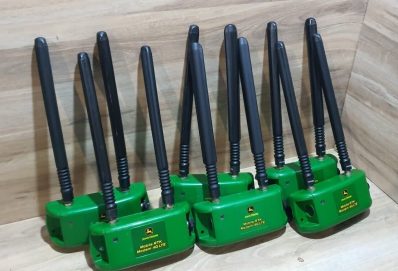
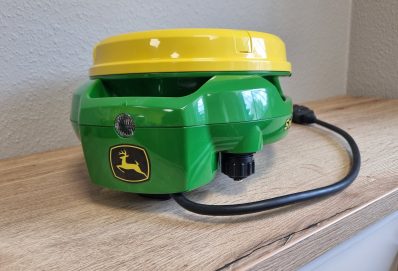
They need to get to know the RTK antenna installed in the centre, as this is the only way they can keep the whole system under control.
The weakness of precision farming
 According to experts, we currently do not know the most important thing: how to set up this new technology.
There may be experiences where the yield will be stronger or weaker.
Satellite data could result in snapshots of heterogeneity across the board.
Two things affect the crop population within a field.
One is topography, which is not much to do with, as it is a given in hilly landscapes.
In the lowlands, however, although there is a difference, this is called micro-climbing.
Interestingly, this difference of a few centimetres often has a greater effect on the population and volume than in the hilly areas.
Another influencing factor is soil composition.
However, the development of native soils can be influenced by a number of factors that still affect production today.
In many cases, the surface within a field is already very stratified for up to 30-40 cm, reaching a sand bank that drains irrigation water, in effect draining it.
Farmers then wonder why this system doesn’t work.
You have to know the soil and its type and quality.
What is the solution?
Some companies will produce soil maps in a few days, but in most cases this is very poor data.
The really effective solution is to go out and check it yourself.
This has already been done many times in our country, and the results are constantly changing as we have more and more complex systems to do this.
Many people are scared and intimidated by it, as they think it is a big job, but field testing is not a devil’s errand.
You have to pick a board and collect the information.
We put it all together to see if there is a topographical correlation to the staining, or if we need to dig deeper.
To this we can add the data that, fortunately, the farmer collects during the agro-technological processes using the machinery he has already bought.