
The most important agricultural tasks and machinery in spring
2024. March 30.In Hungary, we grow a large area of maize, sunflowers, soya, peas, potatoes and sugar beet in arable land.
The area sown to these crops is the largest in spring, but in addition to the proportions, it is important to note that the needs of these crops for cultivation and ecological conditions can vary considerably.
Here we look at the most important agricultural tasks in the spring.
We will also look at what machinery you will need to do this.
The most important technical tools for spring soil work
However, it is also important to take into account the different needs in terms of technology and the use of implements for spring soil work.
The proportion of area under these crops, the quantity produced and the yield can all be important factors.
The average yield has increased slightly in recent years, while the area under cultivation has decreased somewhat.
This is mainly due to improvements in cultivation technology, but also to weather factors and rainfall.
The reason for this is that the aim is to make the best use of biological potential to meet the requirements of cultivation technology, especially for spring-sown crops.
This includes soil preparation, surface levelling and seedbed preparation, all of which have an impact on the overall success of the growing process.
In the case of spring sowing, one of the most important tillage tasks is deep ploughing and ploughing in the autumn, but it also includes ploughing and soil preparation.
It is therefore clear that spring sowing does not start in March either, since work must be done in the autumn to ensure that the crop is successful.
In areas which are not cultivated in the autumn for whatever reason, ploughing and cultivation may not take place until the spring because of lack of time or weather conditions.
In some soil types, it is not even recommended to carry out this work in autumn, mainly because of the beneficial effect of winter frosts, which improves the condition of saline and rough, heavily bound soils.
Borona use in the spring
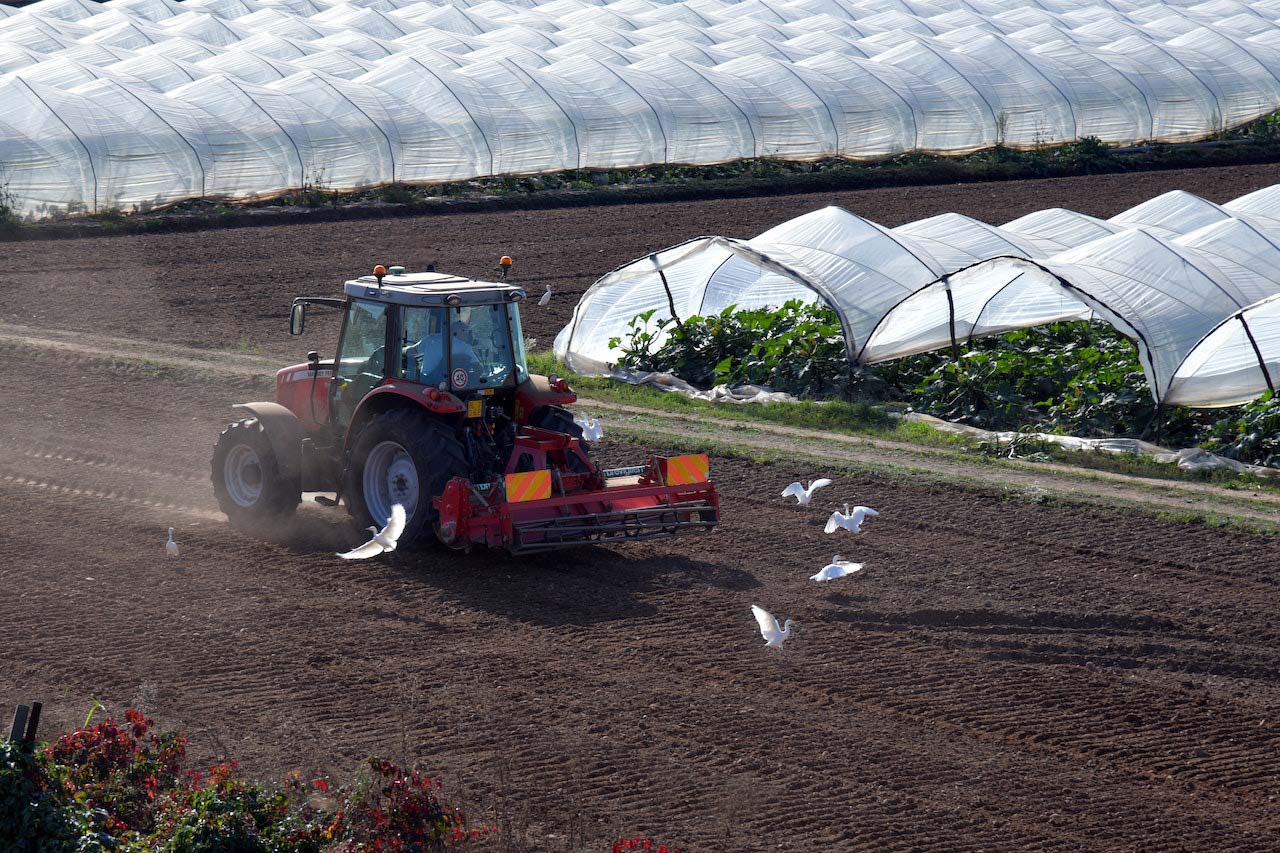 In the case of cultivated ploughs, it is best to use conventional type tines for shallow surface formations.
Depending on their working width, they are made up of several members.
They are attached to the tractor by means of a suspended frame and a towed frame for towing.
In all cases, they are made with folding wings, but in the case of seedbed preparation, rollers are used to close the area after the work is done.
For one-pass seedbed preparation, versions combined with roller drills have been produced, which make the work much easier.
What else might be needed?
Definitely for a trailer, and a suspended soil spreader.
Here you can choose between the 2-row loosening knife arrangement, the model with adjustable side wing knife as well as the model with reversible loosening insert.
The combination of these further simplifies spring agricultural work.
The Quivogne is equipped with a mechanical roller adjustment, a side baffle and a tandem wedge ring roller.
With a working width of 2.5 metres, it can be driven relatively quickly.
The sweeper is also a must, as clearing roads is an important task in the spring.
Fliegl’s sweeper has a working width of 2300 mm and is equipped with a hydraulically operated discharge hopper and 2 support wheels.
The 500 mm diameter plastic sweeping head can be adjusted after wear, so that it can always be operated at maximum performance.
And if a roller is required, the Quivogne Rollmot is the one to use.
This is a model with a working width of 8.3 m, made popular by its robust design.
It has a 70 mm shaft diameter and a transport width of 2.5 m.
And the hydraulically adjustable front trowel is equipped with a prismatic ring and adjustable support leg.